High Court confirms Customary Marine Title for Ruapuke Island Group whānau under amended legislation
Mar 4, 2026
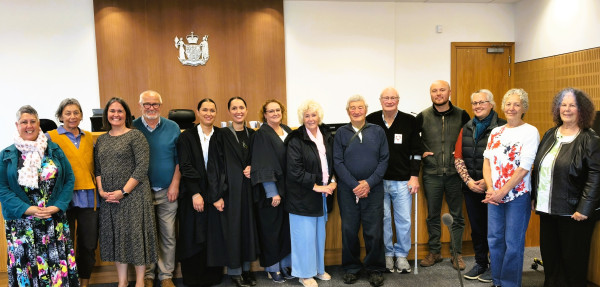
The High Court has reaffirmed that Ruapuke Island Group whānau remained entitled to Customary Marine Title over the waters surrounding the area in Te Ara a Kiwa/Foveaux Strait, following a rehearing under recent legislative amendments.
In a judgment released on Thursday, 26 February, Justice Churchman found the applicant group met the revised legal tests introduced by the Marine and Coastal Area (Takutai Moana) Amendment Act, confirming the same outcome reached in the earlier High Court decision made in August 2025.
The Court concluded that the applicant group had held the specified area in accordance with tikanga continuously since 1840, and had exclusively used and occupied the takutai moana without substantial interruption.
The Amendment Act required the Court to reconsider all evidence once more under the amended law. After reassessing historical, cultural, and contemporary evidence, the Court once again determined that the Ruapuke Island Group applicants met the threshold to hold Customary Marine Title across their full application area.
Evidence presented to the Court included generations of customary harvesting of kaimoana, use of named fishing grounds, seasonal mahinga kai practices, and active stewardship of the marine environment through kaitiakitanga and conservation measures.
Ailsa Cain, of the Kīhau whānau, said the decision again affirmed what Ruapuke whānau and their tīpuna had always known.
“The Amendment Act asked the Court to apply new and more restrictive tests and consider all the evidence again. We are grateful that the Court has once more recognised our whakapapa, our tikanga, and our uninterrupted relationship with these waters since before 1840.”
Ricky Fife, of the Topi whānau, said the decision again demonstrated the significant relationship whānau had to the Ruapuke Island Group, and affirmed mana tuku iho – inherited authority – which provided legal standing to participate in decision-making regarding the marine environment in the area.
“This decision acknowledges the enduring relationship Ruapuke whānau have with the takutai moana, and generations of commitment to protecting, using and caring for it in accordance with tikanga Māori.”
Jasmine Stewart, of the Whāitiri whānau, said the second ruling acknowledged the applicant group and their whānau had demonstrated ongoing practices of kaitiakitanga, mahinga kai, and rāhui, across generations.
The Court also confirmed that activities such as commercial fishing and navigation did not amount to a substantial interruption of customary use and occupation, noting these activities had not prevented whānau from continuing their customary practices or exercising kaitiakitanga.
“This decision further acknowledges something that has never been lost – the relationship between whānau and the water. We thank the court for hearing our case, and affirming the ongoing relationship whānau hold with the Ruapuke Island Group,” she said.
Te Rūnanga o Ngāi Tahu Kaiwhakahaere Justin Tipa joined the Ruapuke Island whānau in acknowledging the significance of the decision.
“We congratulate the whānau on a great outcome and on their resilience. Despite the government changing the law and forcing them back to court to face much stricter tests, their unbroken connection to these waters has now been recognised for a second time.”
“This victory is significant, but we remain deeply concerned for other whānau who now have to fight much harder for their own recognition. Changing the law to raise the bar has put an unfair and unnecessary burden on whānau, hapū and iwi. It also risks shutting out whānau altogether whose whakapapa and tikanga connections are just as strong as those of Ruapuke.”
Importantly, the judgment found that customary interests in the area had never been extinguished by the Crown.
Customary Marine Title does not create private ownership of the marine area. Instead, it recognises inherited authority and affirms the role of whānau as kaitiaki, enabling participation in decisions affecting the marine environment, protection of wāhi tapu, and the continuation of customary practices
The Court invited the applicants to submit a draft order, to formally give effect to the grant of Customary Marine Title.
Background:
The Marine and Coastal Area (Takutai Moana) Act 2011 replaced the 2004 Foreshore and Seabed Act. It provides mechanisms for recognising Māori customary rights, while ensuring public access.
The takutai moana (or the common marine and coastal area) is the area starting from the mean high-tide mark, and ending 12 nautical miles out to sea, though the Ruapuke Island Group application area did not extend that far.
Customary Marine Title (or CMT) granted under the Act recognises the relationship of iwi, hapū or whānau with their traditional area of takutai moana. CMT can’t be sold, but gives holders more say in resource consent processes under the Resource Management Act 1991. Public access, navigation, fishing and other activities are allowed to continue in CMT areas.
The Ruapuke Island Group, on behalf of whānau, was granted CMT in August 2025. However, amendments to the Act were subsequently enacted by Parliament, which meant evidence and legal arguments previously submitted to the High Court by the Ruapuke whānau group had to be reconsidered by the High Court.
 Top
Top