Ngāi Tahu Rūnanga welcome guilty verdict over illegal pounamu export
Apr 1, 2026
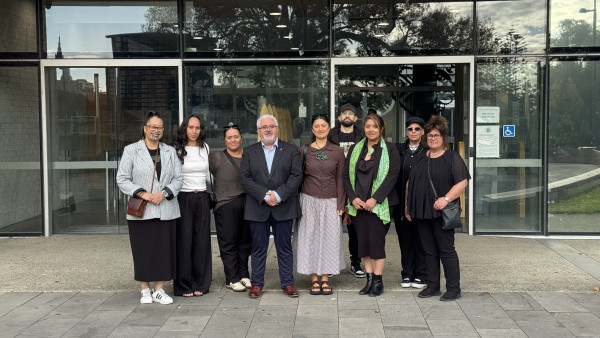
Poutini Ngāi Tahu Rūnanga have welcomed a landmark verdict in the Manukau District Court today, after a mother and son were found guilty of attempting to illegally export pounamu in 2024.
This is the first successful prosecution under the Customs Export Prohibition (Pounamu) Order 2021, which makes it unlawful to export five kilograms or more of raw or partially processed pounamu without permission.
In July 2024, Boyuan Zhang and his mother Xin Li were stopped at Auckland International Airport while attempting to take 17.9 kilograms of pounamu out of the country. This followed an earlier attempt two months prior, when Zhang’s father and Li’s husband was intercepted trying to export two stones weighing a combined 61 kilograms.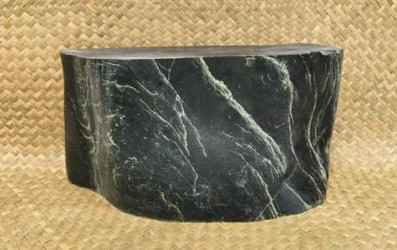
Poutini Ngāi Tahu Rūnanga Co-Chairs Francois Tumahai (Ngāti Waewae) and Paul Madgwick (Ngāti Māhaki) say the verdict sends a strong and necessary message.
“We welcome this decision by Judge Richard Mcllraith which upholds the mana of pounamu,” says Paul Madgwick.
“Pounamu is a sacred taonga, not a commodity to be plundered or smuggled out of the country. Removing it in this way strips away the tikanga, whakapapa, and stories that give the stone its meaning.”
Pounamu has been a taonga for South Island iwi Ngāi Tahu and their tīpuna for hundreds of years. Ngāi Tahu ownership of pounamu was officially recognised in the Ngāi Tahu (Pounamu Vesting) Act 1997.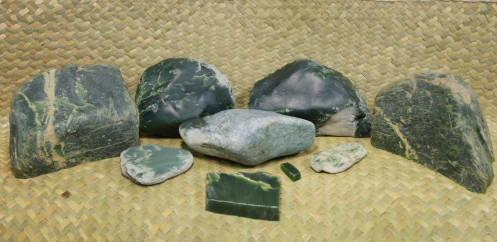
All legitimate carvers and purchasers of pounamu can verify authenticity by asking for a unique traceability code from the seller and entering it on the Ngāi Tahu Pounamu website.
Despite this safeguard, dozens of online listings for illegally sourced stone continue to highlight the scale of the black-market pounamu trade.
“We’re working with Customs and Police to continue cracking down on this illegal activity. Last year, Dunedin Police seized 820 kilograms of stolen pounamu, and in 2024 Customs returned nearly 60 kilograms after intercepting it at the border.”
“We’re especially grateful to the Customs investigators and witnesses for their thorough work in gathering and presenting the evidence that led to today’s outcome in court. They understand the significance of pounamu as a taonga and the importance of returning stolen stone to its rightful kaitiaki.”
Francois Tumahai says the case has exposed areas where the law could be strengthened.
“The defence argued confusion about the rules, including whether stone could be split across multiple people to avoid the weight threshold. Regardless, the intent was clearly to remove raw pounamu from New Zealand for commercial gain.
“While the law currently allows under five kilograms of stone to be exported without permission, we believe that threshold needs to be significantly reduced to prevent would‑be smugglers from exploiting loopholes,” he explains.
Both rūnanga say further reform is needed, as the current law leaves ultimate decision‑making power with the Crown rather than recognising the authority of its legal owner.
“At present, exporting pounamu requires the approval of the Minister of Customs, with the consent of Te Rūnanga o Ngāi Tahu, or Māwhera Incorporation if the pounamu is from the Arahura River catchment. In our view, decisions about whether pounamu can leave New Zealand should sit with the legal kaitiaki of the stone, not with the Crown."
Poutini Ngāi Tahu Rūnanga and Te Rūnanga o Ngāi Tahu will continue to raise these matters with the Ministry of Business Innovation and Employment, including through a planned review of the pounamu export regime next year.
 Top
Top