Ngāi Tahu welcomes stewardship land decisions
Dec 11, 2025
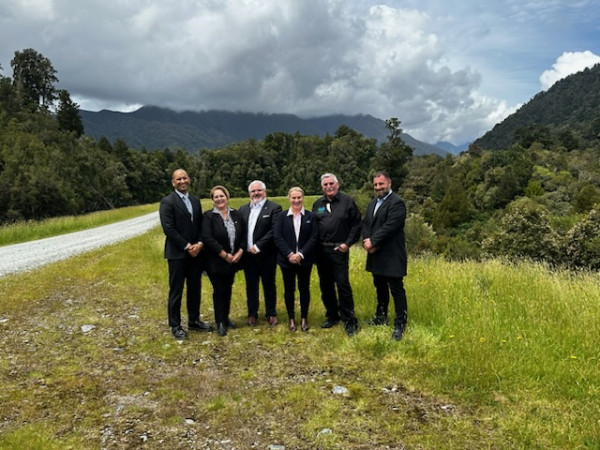
Ngāi Tahu welcomes Conservation Minister Tama Potaka’s announcement, which finalises decisions on most of the stewardship land across Te Tai Poutini.
The reclassified land spans large parts of the West Coast, where mana whenua have maintained deep connections for centuries.
Poutini Ngāi Tahu Co-Chairs Paul Madgwick (Te Rūnanga o Makaawhio) and Francois Tumahai (Te Rūnanga o Ngāti Waewae) say the announcement represents a productive step forward for Te Tai Poutini.
“We’re pleased with today’s announcement. It gives our communities much greater clarity about the future of large sections of land on the West Coast.
“It’s taken four years and five conservation ministers to reach this point. The process has been rigorous, and we’re pleased the Minister’s decisions reflect the diverse interests of Te Tai Poutini. Importantly, they recognise our unique Ngāi Tahu history and the places that have sustained us for generations.”
Ngāi Tahu went to court in 2021 after being excluded from the reclassification process, arguing this breached section 4 of the Conservation Act. That led to the establishment of a Ngāi Tahu Mana Whenua Panel to work alongside the Department of Conservation and a National Panel.
Te Rūnanga o Ngāi Tahu Kaiwhakahaere Justin Tipa says the Mana Whenua Panel’s inclusion ensured recommendations were informed by a strong local voice.
“These decisions show the value of having mana whenua involved in the process. Our people know their communities and have a deep understanding of what it takes to strike the right balance on a topic as important and complex as land reclassification.”
Paul Madgwick and Francois Tumahai say they’re proud to see the creation of the 181,000ha Tarahanga e Toru Historic Reserve.
“This vast area holds Poutini Ngāi Tahu legends, customs and traditions centred on pounamu. Tarahanga e Toru recognises the ara tawhito – the ancient passes linking the east and west coasts – along with the mahinga kai that sustained our pā, battles fought here, and seasonal nohoanga sites,” explains Paul Madgwick.
Three other areas of immense cultural significance to Ngāi Tahu will become Historic Reserves: Kotorepi, Kaiata, and Kōhuamaru.
“We’re equally pleased to have these special places acknowledged. Formal protection ensures they will endure for generations to come,” adds Francois Tumahai.
Certain areas will remain as stewardship land for further assessment. These contain pounamu, links to historic pā sites, papakāinga, wāhi tapu, or have potential to become Māori Reserves. Some areas may also be needed for local infrastructure and climate resilience planning.
Ngāi Tahu recently filed proceedings against the Crown over proposed changes to the Conservation Act. Justin Tipa says today’s announcement reinforces why it’s important to stand firm.
“We had to go to court four years ago because the Government ignored us. That action secured our involvement in the stewardship reclassification process and has delivered a great result for the West Coast today.
“Our more recent litigation on proposed changes to the Conservation Act is about protecting our Settlement and ensuring we continue to have opportunities to work for positive outcomes in our takiwā. Today is a good example of what can be achieved when the Crown respects its Treaty partnership and honours its commitments.”
Ngāi Tahu will continue working with the Department of Conservation on next steps, including discussions about classifications for remaining areas of significance to the iwi.
Background:
Kotorepi Historic Reserve:
This Historic Reserve has high historic and cultural value. It has links to Poutini Ngāi Tahu pounamu legends as a landing point for the Tairea Waka. It was here at Kotorepi that the Tairea Waka sprang a leak and pulled ashore for repairs, baling out as they ran to shore. These balings were turned to pounamu, which are still washed up on Kotorepi beach and are regarded as tapu.
The Tairea Waka eventually carried on, with Tama Ahua travelling behind in pursuit. Tragically Hineaotea drowned in the Makaawhio River and Hinetangiwai at Piopiotahi, before the waka itself sank in the upper Arahura River with the loss of Hinekawakawa and Hinepounamu, accounting for the pounamu in the Arahura. There is an ancient burial ground (pre-Ngāi Tahu conquest) immediately adjoining this site, along with a historic Pā site.
Kaiata Historic Reserve:
Kaiata is the place where, after defeating the resident Ngāti Wairangi in a series of conflicts, Ngāi Tahu decided to stay on Te Tai Poutini to consolidate their conquest by occupation. There is also Māori Reserve land adjacent to this conservation area.
Kōhuamaru Historic Reserve:
This area has immense cultural significance for Ngāi Tahu.
The Ngāi Tahu association with the Ōkārito lagoon area is described in the Statutory Acknowledgement in the Ngāi Tahu Claims Settlement Act 1998. Ōkārito was one of the largest mana whenua kāika/settlements in South Westland. The Ngai Tahu connections with Ōkārito stem from the ancestor Karito (the lagoon), and his daughters Wahapako (lake) and Mapouriki (lake), wrongly mapped as Wahapo and Mapourika.
The lagoon, coastal and lowland region were a rich mahinga kai source, not just with the food basket of the lagoon and rocky coastline, but also the tītī that roost in the cliff faces and were sustainably harvested by Poutini Ngāi Tahu from Mahitahi. Ōkārito was also the site of a well-renowned traditional centre of learning. Ōkārito is well known as the only kōtuku (white heron) breeding colony in the country, and Poutini Ngāi Tahu are the kaitiaki. Kōtuku are a taonga species for Ngāi Tahu, and the subject of many Ngāi Tahu waiata. In recognition of this ongoing kaitiakitanga, Ngai Tahu insisted on reserving Waitangi-roto from sale to the Crown, and kept kaitiakitanga until the 1950s when the Crown coerced a few of the absentee owners to sell.
Two other small reserves were apportioned here in 1860, one on the Ōkārito Lagoon spit and the other at the Kohuamaru Pā site, in the middle of what is now Ōkārito village. This pā site is located at the foot of the hill overlooking the village. This pā is tapu to Ngāi Tahu and the scene of some bloody battles, yet as recently as 1970 the Poutini Ngāi Tahu ownership of this land was severed through an error in the Māori Land Court that allowed it to be converted to European title and sold. Ngāi Tahu maintains a connection with Ōkārito with a nohoanga and a mātaitai covering the entire lagoon.
 Top
Top