Te Rūnanga o Ngāi Tahu honours the life and legacy of Masashi Yamada (1923–2025)
Jan 15, 2026
Te Rūnanga o Ngāi Tahu honours the life and legacy of Masashi Yamada (1923–2025)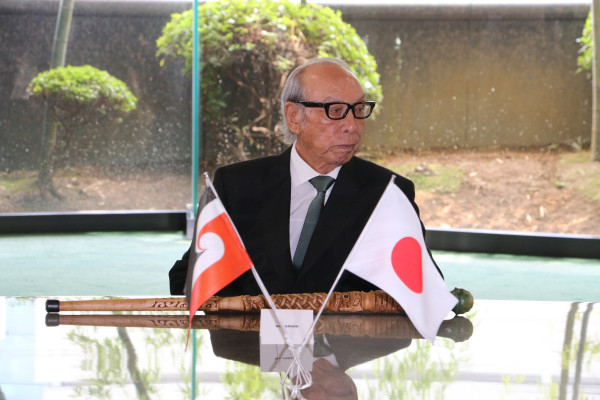
Pupuke nei kā tai
Huri noa i Te Waipounamu
He haruru i tawhiti
Kotokoto ana a waikamo
Nanawe ana te aroha
Mōhou rā e te pōua
E te pou hereka waka o te iwi
E taki nei, e kaniawhea nei
Me pēhea rā tāhaku tārai kupu
E kore rāia koe e hoki mai
Nāhau anō te awatea
I haehae kia whītikina
Ko te huanui ki te anamata
Mō kā makorea o Tahu
Nō reira rā
Kai te whitika o te rā
Ko te tōka ki a koe
Waiho mā mātau
Koe e takiauē
Moe mai rā
Te Rūnanga o Ngāi Tahu honours the life and legacy of Masashi Yamada and acknowledges his passing with deep respect and gratitude for the life he lived and the man he was.
Through his close and enduring friendship with Tā Tipene O’Regan, Mr Yamada offered immense support that proved instrumental in Ngāi Tahu’s journey to settlement and in opening doors to educational opportunity for future generations of Ngāi Tahu rangatahi.
For more than three decades, Mr Yamada stood alongside Ngāi Tahu at a time of profound uncertainty. During the years leading up to settlement, the iwi faced prolonged Waitangi Tribunal hearings and complex negotiations with the Crown, often with limited resources. Through his personal commitment and belief in the kaupapa, Mr Yamada provided practical and financial support that sustained the iwi through this critical period.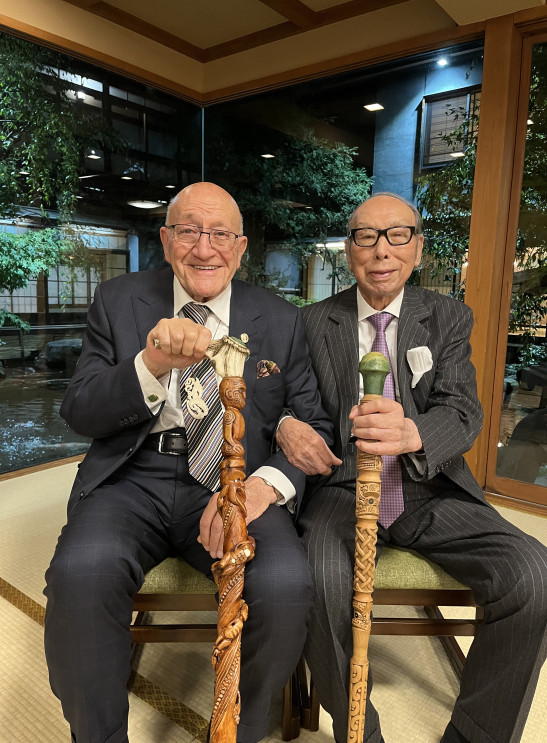
A friendship grounded in shared values
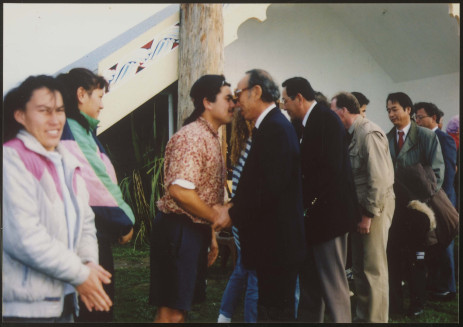
The relationship between Mr Yamada and Tā Tipene began in 1989, when a delegation from the Yamada Corporation visited Aotearoa to explore property investment opportunities. During that visit, Mr Yamada was introduced to Tā Tipene, a meeting that would become one of lasting significance.
What followed was a connection grounded not in transaction, but in shared values and mutual respect.
Masashi Yamada was born in 1923 in Ishinomaki, a coastal town in Miyagi Prefecture near Sendai, Japan. He was raised by his mother, a remarkable businesswoman who established a fishing company that would grow into what became the Yamada Group. At a time when few women were engaged in business, particularly international trade, she was fluent in English, commercially astute, and deeply values-driven.
“There were very few women in those days who could speak English and who were involved in business, so she was one of a kind, the first leader and first chair of Yamada Group,” Mr Yamada later recalled.
“Thanks to trade, she started to do some good business and invested the profits in real estate. This is how the real estate sector of the Yamada Group started.”
As the business flourished, his mother moved to Yokohama to expand the company. Mr Yamada later studied property management at university in Tokyo before joining the family business, helping to administer and grow the company across four streams: trade, fisheries, real estate, and leisure.
Central to his upbringing was his mother’s belief in education as the foundation of peace.
“She believed that to avoid wars, people needed to be educated properly and that education was the base of peace. I was brought up with that in mind, so education was always very important.”
Standing alongside Ngāi Tahu
The Pacific Ocean, Te Moana-nui-a-Kiwa, which separates Aotearoa from Japan, became a powerful metaphor for the relationship that developed between two men from two nations.
During the Yamada Corporation’s 1989 visit, Christchurch-based businessman Graham Kitson (Ngāi Tahu), who had studied in Japan and held a long-standing interest in the country, assisted the delegation. It was Dr Kitson who suggested that if Mr Yamada was interested in fishing, he should meet Tā Tipene.
The meeting was serendipitous. Unknown to many at the time, Ngāi Tahu was on the brink of abandoning its legal fight for settlement due to a lack of funds.
A series of loans from Mr Yamada during the 1990s, amounting to many millions of dollars, gave the iwi the financial breathing space it needed to continue through years of hearings and negotiations.
Reflecting on their first meeting in an interview with Te Karaka in 2014, Mr Yamada said:
“I was very taken by his passion and the way he talked about his culture and about Ngāi Tahu, and I thought he was a fantastic human being. He touched me very much. That was the trigger of my interest in Ngāi Tahu, that very strong, passionate personality of his.
“And then I also remembered my mother’s words about how it was important to have friends all over the world, and I thought I should make this man my friend and support him. That was also part of the relationship, the human encounter.”
This relationship not only helped enable settlement, but also laid the foundations for Ngāi Tahu Fisheries, which in turn capitalised Ngāi Tahu Property and supported the iwi’s long-term economic transformation.
Cultural exchange and enduring generosity
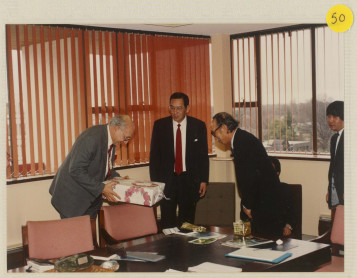
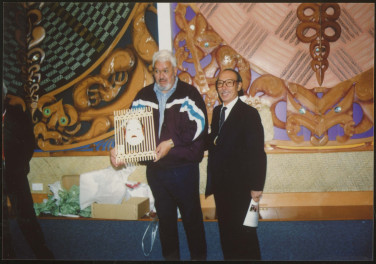
In June 1992, Mr Yamada returned to Aotearoa and gifted Ngāi Tahu a traditional Noh mask, now housed in Aoraki, the main boardroom at Te Whare o Te Waipounamu. This taonga remains a lasting symbol of cross-cultural respect and friendship.
During the same visit, he travelled to Takahanga Marae, where he spent time with Bill Solomon, discussing the importance of education and the responsibility to future generations.
“I remember sharing some delicious lobster and soup, and during that dinner Bill Solomon and I talked about the next generations and young people and how important it was to ensure that they would keep on the traditions in which they were born,” Mr Yamada said.
“He talked about it with pride and with anxiety.”
Following settlement, Mr Yamada once again demonstrated his generosity and commitment to indigenous development. When Tā Tipene sought to repay the loans, Mr Yamada instead proposed that the funds be redirected toward education.
“When Sir O’Regan came back to see me to repay the loan that I had given the tribe, I thought about that conversation I had with Bill about how important education was for young people,” he said.
“This is why I decided to say, ‘No, why don’t you keep it and let’s make a scholarship that contributes to the cause of education for Ngāi Tahu people.’”
As a result, the Ngāi Tahu Mātauranga Trust was established in 2001, followed by the Yamada–O’Regan Secondary School Scholarships. These scholarships advance Ngāi Tahu secondary school students to complete their schooling and successfully attain formal qualifications. They stand as a powerful representation of cross-cultural friendship and profound generosity.
A legacy carried forward
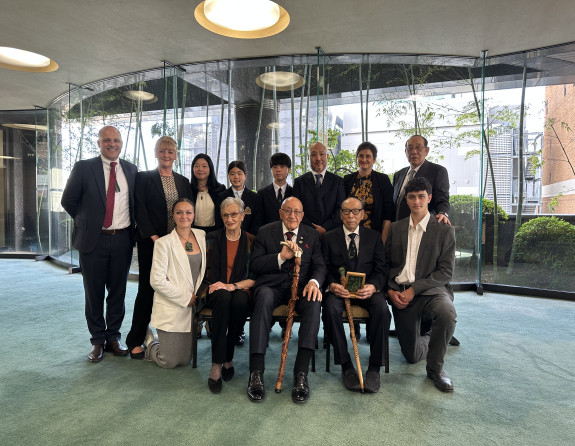
In November 2023, three generations of the Yamada and O’Regan whānau gathered in Tokyo for what would become a final farewell between Mr Yamada and Tā Tipene.
During that visit, discussions took place about establishing an alumni group, supported by an annual contribution from the Yamada Group, matched by the iwi.
“On the last morning of our stay, he came to say goodbye to us at the hotel,” Tā Tipene recalled.
“He passed a blue folder to me with documents inside giving us a contribution to the fund of $1 million.”
The Yamada–O’Regan friendship will continue through these younger generations, and through Tā Tipene’s enduring relationship with Narimoto, who played a key role in bringing the two men together.
Ngāi Tahu honours Masashi Yamada with deep respect and gratitude. His legacy lives on through education, friendship and the enduring bonds he helped forge across generations, across cultures, and across Te Moana-nui-a-Kiwa.
 Top
Top