Waitangi, Cohesion, and the Centre Ground: A Challenge to Our Major Parties
Feb 11, 2026
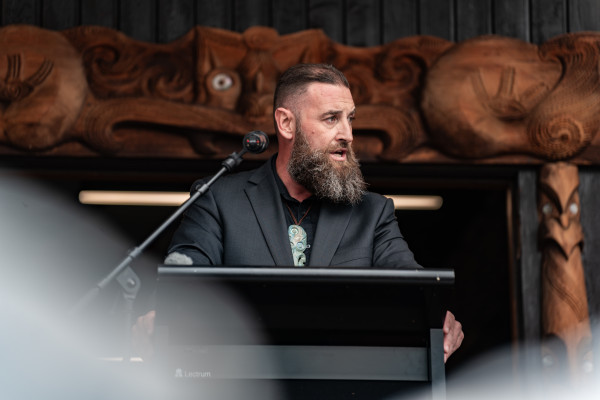
Last year, Ngāi Tahu hosted the Prime Minister and other senior National Party Ministers at our annual Waitangi Day commemoration event in Te Waipounamu. Much was made about the Prime Minister supposedly ‘running away’ from Waitangi to hide out with Ngāi Tahu. We even received a few barbs for inviting him. But we made no apology.
I took the opportunity to address the Prime Minister and the National Party directly, and to say my piece about all things Te Tiriti, Māori politics, and national identity.
I stand by my diagnosis of our current problems: a nation is not a blank canvas. It’s not something for political parties to carelessly attempt to paint over in their party colours. It’s an inheritance that comes to us with unique elements that bear the marks of our history. Pretending we can fundamentally change those elements with the stroke of a pen or through blind majority rule inevitably leads to political instability and social disharmony.
As the general election approaches, the question we should be asking is: What lessons can we draw from the past few years? I don’t think anyone can honestly say that the thickening of the margins on Treaty issues has made New Zealand a stronger nation. It doesn’t matter where you sit on the political spectrum. Increased polarisation might translate well to clicks and rallies, but it undermines the careful, durable reform a stable country actually needs.
We’re entering a period in which the international rules‑based order we’ve long taken for granted is visibly weakening. No country can afford to waste energy on unproductive internal political divisions in that environment. When the external world becomes more uncertain, internal cohesion becomes a strategic asset rather than a nice‑to‑have.
Whether we like it or not, the fact that we inhabit the same country means something. It imposes a relational responsibility on us and creates a shared identity as New Zealanders — a shared identity that only holds if we choose to stay bound together as a tight scrum. It also obliges us to attach real political value to social cohesion, sometimes at the expense of our personal political or philosophical convictions. That’s largely what the political centre represents: not a group of individuals who are ‘neither here nor there’ on a lot of issues, but a recognition that a degree of political temperance is needed to keep our social fabric stable and intact.
When it comes to Treaty issues, that type of political temperance is now framed as weakness, both on the right and on the left. That’s only possible when the territory has been ceded. In the absence of a credible alternative vision that leverages the political value of authentic social cohesion, ideology creeps in. I’m convinced that’s what we’re seeing.
I’m wary of overstating it, but on Waitangi Day it’s worth indulging the thought: Treaty issues will likely surface as a prominent election issue, although we’re in a very different place than we were in 2023.
ACT’s bald libertarianism has largely lost the room, having demonstrated that it’s not capable of sustaining an authentic discussion about national identity. Te Pāti Māori have lost themselves, and they appear unlikely to have their waka repaired in time to be serious contenders in November.
Meanwhile, the relationship between the Green movement and iwi has long been a cautious one, and it’s not clear exactly what the Green Party’s real endgame is when it comes to the Treaty.
At the same time, NZ First seems to be climbing in the polls, and I wouldn’t be surprised if part of that is due to their commentary on Treaty matters. Whether anyone acknowledges it or not, as battle‑tested elder statesmen of Te Ao Māori and New Zealand politics, Winston Peters and Shane Jones command a certain authority on matters Māori.
Which leaves National and Labour, both of which have in different ways paid a political price for inadequate approaches to Treaty issues over the past two terms. Neither can afford to repeat their mistakes, and they would be wise not to underestimate the importance of getting that part of their election campaigns and policy manifestos right. There is no sidestepping the Treaty question in New Zealand politics.
And as we edge closer to the bicentennial of Te Tiriti in 2040, the pressure on our major parties to articulate a clear, confident vision for our nation’s future will only grow.
So this Waitangi Day, and as we head towards election 2026, I’ll be watching to see who recognises the opportunity before them. My guess is that there’s a political prize on offer to any party that can answer the Treaty question in a way that charts a credible path to greater social cohesion and a tight New Zealand scrum ready to meet a more volatile world.
 Top
Top