Annual Report 2026
Foreword from Te Rūnanga o Ngāi Tahu Kaiwhakahaere (Chair)
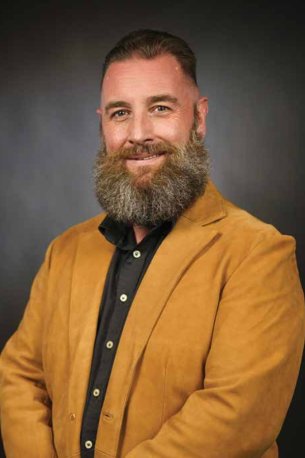
At the time of Settlement, Kāi Tahu had approximately 29,000 registered tribal members. Almost thirty years later, that number has surpassed 90,000. This reflects a growing iwi, a strengthened identity, and new generations choosing to acknowledge their whakapapa.
Over the same period, the tribe’s financial base has also grown substantially. The settlement of the Ngāi Tahu Claim provided Kāi Tahu with $170 million and a range of assets. Today, Te Rūnanga o Ngāi Tahu manages total assets of $2.45 billion.
That growth has changed the strategic landscape for the tribe. Over nearly three decades of post-Settlement development, we have proven that we can grow pūtea, run businesses, develop land and property, invest in our people and Kāi Tahutaka, support Papatipu Rūnaka development, uphold the mana of our taiao, mahika kai, and wāhi tapu, influence local and national decision making, and build enduring strategic relationships.
The challenge now is to bring that capability together with greater cohesion and strategic alignment. Activity alone is not enough. Nor is success in disconnected parts of the tribe.
Our collective effort must create opportunities to connect with culture and identity. It must be financially sustainable. And it must build a truly Kāi Tahu future: one in which our descendants can participate and benefit wherever they live, our Papatipu Rūnaka and marae communities are strengthened, and we invest meaningfully in our takiwā.
That challenge has shaped the direction Te Rūnanga has taken over the past three years. Over that time, Te Rūnanga has made decisions that have created a strong platform for change and evolution within Te Rūnanga Group. This has included a focus on intergenerational financial sustainability, balancing what we spend today against what we preserve for future generations. We reviewed the Investments Charter and its distribution settings and, as an interim measure, imposed a $60 million spending cap on the Office for FY2026. That review is now complete. Te Rūnanga has adopted a 2.5 percent distribution rate and a baseline distribution of $55 million, confirming that the financial discipline introduced through the interim measure will continue. The effects of these settings will be more evident in next year’s Annual Report.
We have also made clear that the next phase of our development, guided by the vision of Mō Kā Uri – Kāi Tahu 2050, will place culture and connection, together with support for our pā and Papatipu Rūnaka to pursue their own aspirations, at the heart of our Kāi Tahu future.
These are the priorities that inspired me to stand for Kaiwhakahaere in 2023, and they continue to shape the philosophy I bring to the role. The case for that direction is reinforced by the pressures around us. Global political instability is creating economic uncertainty, the cost of living continues to affect whānau and communities, and the political environment is placing renewed pressure on the constitutional standing of Te Tiriti o Waitangi and the Ngāi Tahu Settlement. In this environment, our tribal structures must be strong, effective, and underpinned by intergenerational financial discipline. The Settlement secured an institutional foothold after seven generations of struggle by our tīpuna. We cannot take it for granted; we must continue to occupy and protect it.
The executive leadership of Te Rūnanga Group is now giving effect to the direction set by Te Rūnanga. The decisions involved are difficult and carry real consequences. As Te Rūnanga, we must weigh those consequences carefully against the long-term purpose of this work: to remember the foundations laid by those who carried Te Kerēme, review honestly what has been built since Settlement, and reset the systems that connect our resources, responsibilities, and aspirations for the generations ahead.
The Group enters this next phase on a strong financial footing. Despite global economic uncertainty, the Group’s total assets increased to almost $2.5 billion. It recorded a surplus of $119 million for the year, underpinned by an operating surplus of almost $102 million. This reflects strong performance across the Group’s diversified portfolio. Total comprehensive revenue reached $196 million, reflecting both the year’s surplus and growth in the value of assets held across the Group.
It is a great honour to serve the tribe at this pivotal time. I am grateful to my fellow rūnanga representatives for their support as we continue to guide Te Rūnanga Group through this period of significant transformation. I also want to thank the many kaimahi across the Group for all they do in service of our people. I am humbled to be standing unopposed for a second term as Kaiwhakahaere in our November election, and I remain deeply committed to the task ahead. Ahakoa kā hau āki, ahakoa kā karu teitei o te wā, me whakiri matamata tou te haere o te waka.
Justin Tipa
KAIWHAKAHAERE
Foreword from Te Rūnanga o Ngāi Tahu Kaihautū (CEO)
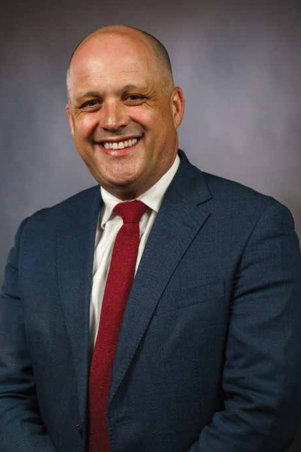
Thirty years after Te Rūnanga o Ngāi Tahu published its first annual report, we are entering a new phase in the development of our iwi.
The first twenty-five years after Settlement were about rebuilding our foundations, restoring our presence, growing our assets, strengthening Papatipu Rūnaka and creating opportunities for whānau. The next twenty-five years, guided by Mō Kā Uri, must be about using those foundations to strengthen Kāi Tahu culture and the wellbeing of generations to come.
As the Kaiwhakahaere acknowledges, these are difficult times. Many whānau are under pressure, and the global order on which we have long relied feels less secure. In a fractious world, we must stay strong in who we are, clear about what matters, and ready to act together.
This year we took some important steps towards that future.
Te Rūnanga approved Kai te Haere, our first strategy for the whole Te Rūnanga Group, and Uruuruwhenua, the new two-year plan for the Office. The name Uruuruwhenua comes from the karakia performed when crossing from one territory into another. We also reviewed our investment and distribution settings and confirmed the first classification of Taonga Assets across the Group.
Together, these decisions are about making sure the resources and capability built since Settlement work harder and more collectively for Kāi Tahu whānui.
We will never be able to do everything, so we are choosing to focus on what will make the greatest impact, now and for the generations to come.
Living within our means
Part of that focus is living within our means.
The Office’s FY2027 operating budget is $55 million, approximately $5 million lower than FY2026 and $23 million lower than FY2025, and within that smaller budget a greater share is now going to Papatipu Rūnaka. As in any whānau, everyone has a role to play, and our new budget helps each of us focus on our own. For me, it’s simple – we are at our best when we play as a team.
Rather than simply reducing costs, we have used this opportunity to reconsider what the Office exists to achieve. By reviewing our work against the priorities of the iwi, we have reduced duplication and directed our effort where it will have the greatest impact, moving from 96 legacy programmes to 56 clearer commitments. Our aim is to measure success not by how many programmes we run, but by the difference we make for whānau, Papatipu Rūnaka and future generations.
Working as one
This is the first time Te Rūnanga Group has worked to a single strategy. When I joined the Group in 2015, each part had its own, with little to connect them. In my mind, we are at our worst when we play for ourselves, which is why the direction Te Rūnanga has set through Kai te Haere matters so much, giving us the cohesion to act as one.
At its heart is the recognition that the strength of Kāi Tahu lies not in any single part of the Group, but in what we can achieve together. We saw that this year when Papatipu Rūnaka, Ngāi Tahu Holdings and the Office came together to acquire a one-third shareholding in Milford Sound Tourism, restoring a Kāi Tahu foothold in Piopiotahi.
We also saw it when Te Rūnanga o Kaikōura, supported through the Regional Investment Fund, secured the purchase of Matariki Pā to Kāi Tahu ownership after more than 160 years. These are tangible examples of what collective strength can achieve, reconnecting our people with important places and strengthening our presence across our takiwā.
Our investment in Papatipu Rūnaka has also grown significantly. Annual distributions have increased from $180,000 in 1996 to more than $13 million, building economic strength and the ability of rūnaka to pursue their own priorities and aspirations.
Investing for generations
We know the value of thinking beyond the immediate horizon. Twenty years ago, Kāi Tahu established Whai Rawa before KiwiSaver existed, and today it has almost 39,000 members and $213.7 million under management. But much has changed in those 20 years, and even our most successful programmes must keep evolving to meet the needs of whānau today. That willingness to think generations ahead must guide us now.
We will embrace technology and invest in better ways for whānau to connect with their iwi while strengthening our ability to protect and advance the rights and interests fought for through Te Kerēme. We will always ask a simple question of the resources entrusted to us; are they creating the greatest possible value for Kāi Tahu whānui, now and for those who come after us?
That is the purpose behind the changes being made across the Office. Change of this scale is not easy. I acknowledge our kaimahi, who have continued to serve whānau while helping reshape the organisation for the future. The value of the mahi that came before does not disappear because we choose a different path. I also thank our representatives for setting a clear direction, and our whānau and Papatipu Rūnaka for continuing to remind us of what matters.
We have inherited something extraordinary. The generations who carried Te Kerēme left us a stronger platform than the one they inherited. Our responsibility is to do the same, to protect what they achieved through sacrifice, use it wisely, and leave our mokopuna with greater choices and opportunities than we have today.
Mō tātou, ā, mō kā uri ā muri ake nei.
Ben Bateman
CHIEF EXECUTIVE OFFICER
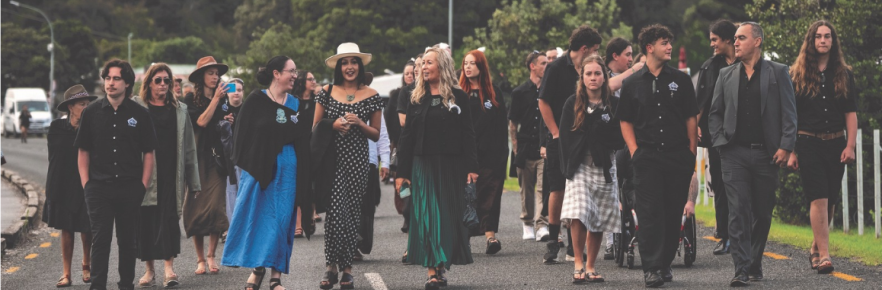
Kāi Tahu ope, led by Te Rūnaka o Ōtākou, at Waitangi for Waitangi Day 2026.
Te Rūnanga Group finances at a glance
As at 30 June 2026
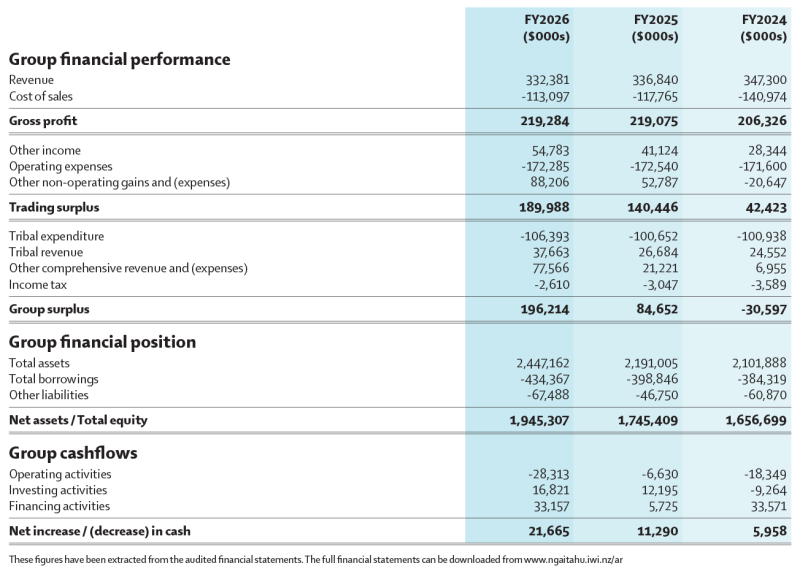
At a glance
Distribution to TRoNT
$82.6m
Distribution as a Share of Net Assets
4.2%
Net Assets
$1.95b
Growth in Net Assets
11.5%
Debt to Total Assets
17.8%
Ngāi Tahu Holdings Corporation Chair and Chief Executive’s report
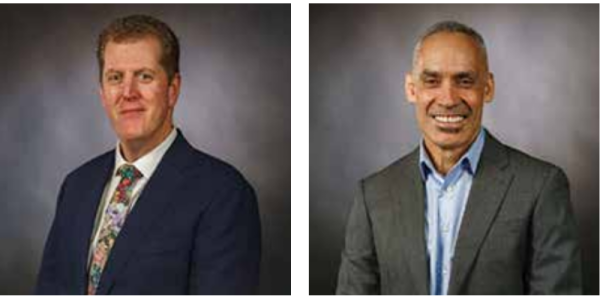
|
Todd Moyle |
Warwick Tauwhare-George |
For more than 30 years, Ngāi Tahu Holdings Corporation (NTHC) has had a clear purpose: to protect and grow the economic base of Kāi Tahu, creating the financial foundation to support the aspirations of the iwi and provide greater choice for generations to come.
That purpose took shape before Settlement. While tribal leaders were working to secure redress for generations of loss, they were also looking beyond it. They understood that Settlement alone would not secure the future they envisioned.
In 1996, two years before Settlement, NTHC was established to manage a growing property and seafood portfolio and provide a vehicle through which tribal assets could be protected and developed over time. Many people contributed to shaping NTHC in its early years, including leaders such as Tā Tipene O’Regan, Charles Crofts and Sid Ashton. Their decisions continue to influence its direction and purpose today.
The earlier pages of this report reflect the impact of their foresight. Through its annual distribution, NTHC has worked alongside Te Rūnanga o Ngāi Tahu to support the aspirations of the tribe.
Today, NTHC manages a portfolio with total assets of $2.33 billion. That growth reflects decades of sustained effort by kaimahi, leaders and governors, all building on the vision and foundations laid by those who came before them.
Turning to the performance over the past year, NTHC delivered a solid result, with a net operating surplus of $101.8 million, up 22 percent on the prior year, and a distribution of $82.6 million to the Ngāi Tahu Charitable Trust.
First and foremost, we are a people business. More than 500 kaimahi contributed to this year’s result across our farms, tourism experiences, property developments, seafood operations, investment activities and corporate functions. The skill, dedication and care they bring to their mahi every day is reflected in the results we achieve.
A single year does not define success. Last year, we introduced additional reporting to provide greater transparency on NTHC’s performance over time. This report builds on that approach, offering a clearer view of portfolio performance and the decisions that have shaped where we stand today.
That long-term perspective has also influenced the Office’s work over the past year to develop Mō Kā Uri, the iwi vision for the next 25 years. NTHC supported the Office to produce Kai te Haere, the Group’s response to Mō Kā Uri, while NTHC’s Uruuruwhenua translates those expectations into our prioritised actions and activities, building on work already underway.
In recent years, we have worked closely with Te Rūnanga o Ngāi Tahu to ensure whānau aspirations are reflected in our investment framework, while increasingly partnering with Papatipu Rūnaka on opportunities that create shared value. These include Te Whata Tuarima, our latest property partnership with Ngāi Tūāhuriri, and co-investment by several rūnaka in Milford Sound Tourism Limited, strengthening our presence in Piopiotahi – a place of deep significance to Kāi Tahu.
Across the portfolio, more whānau are joining our companies, spending with whānau-owned businesses continues to grow, and most Papatipu Rūnaka are investing in financial products developed by NTHC to meet their needs. These are early signs of progress towards the shifts committed to within Kai te Haere. Tū Kātahi Tū – Working as One, and Kāi Tahu, Tū ki te Ao, Tau Ana – Present and Enduring.
As noted earlier in this report, balancing the needs of today with those of future generations has led Te Rūnanga o Ngāi Tahu to make several significant decisions.
Key among these was the decision to reduce the annual distribution rate from next year. This will retain approximately $100 million of additional capital for investment over the next five years, strengthening our ability to deliver intergenerational outcomes through the annual distribution to the Ngāi Tahu Charitable Trust over the long-term. Over the 25-year horizon of Mō Kā Uri, this change is forecast to increase tribal pūtea by more than $2 billion.
There has also been substantial progress made in developing the Te Rūnanga o Ngāi Tahu Taonga Assets Policy. NTHC recognises the significance of these decisions and the responsibility they place on us to deploy capital prudently, with a clear awareness of the risks that may affect long-term outcomes.
Repositioning the investment portfolio remains a strategic focus for NTHC. As we pursue this mahi, we remain mindful of external risks that could affect our progress and continually assess how best to mitigate those risks or avoid them altogether.
FY2026 saw significant new commitments to Te Aka Haumi, an infrastructure platform with us investing alongside ACC; Beca Group, through Direct Capital Rima LP; and Milford Sound Tourism Limited. Since year end, we have also completed an investment in Tend Health and announced the sale of Fidelity Life, subject to regulatory approvals.
Over the next few years, we expect to make major new investments spanning infrastructure, renewable energy, healthcare, property development and other sectors where we see opportunities for long-term growth.
Recent developments around the Hananui Aquaculture Project provide a glimpse of the scale of opportunities that may emerge in the years ahead. However, this project shouldn’t be viewed as a foregone conclusion. As with any investment opportunity, we will take the time to carefully assess the feasibility before making any decisions.
We will not be doing this alone. We will continue working as one, with the Office, and alongside Papatipu Rūnaka and partners who share our values and commitment to delivering strong performance and long-term prosperity for Kāi Tahu and our communities. We remain grateful for the foundations laid by earlier generations and encouraged by what lies ahead. Our responsibility remains the same as theirs: to leave NTHC stronger than it was when it was entrusted to us.
Mō tātou, ā, mō kā uri ā muri ake nei.
Download the full report
2025-2026 Annual Report and Summary Group Financial Statements
Here you can download:
Full Annual Report 2025-26
The Summary Group Financial Statements 2025-26
Hard copies of the annual report are available by calling 0800 KAI TAHU.
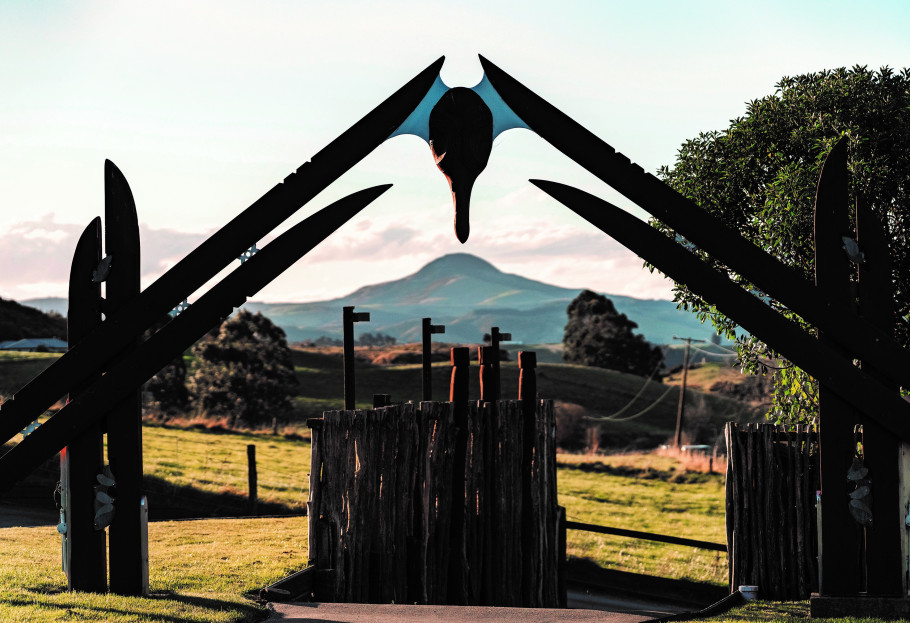
Hikaroroa/Mt Watkin - view from Puketeraki Marae
 Top