Pounamu
Ownership and management of pounamu
Pounamu is a taonga of fundamental importance to Ngāi Tahu, carrying deep cultural, spiritual and ancestral significance.
The Ngāi Tahu (Pounamu Vesting) Act 1997 vests ownership of all natural-state pounamu within the Ngāi Tahu takiwā and adjacent territorial sea in Te Rūnanga o Ngāi Tahu on behalf of Ngāi Tahu Whānui. The exception is pounamu in the Arahura catchment, which is owned and managed by Māwhera Corporation.
The 2002 Te Rūnanga o Ngāi Tahu Pounamu Resource Management Plan provides the iwi-wide framework for protecting, accessing and using pounamu. It recognises Papatipu Rūnanga as kaitiaki, with authority to manage, protect and regulate pounamu within their takiwā.
Nine rūnanga exercise kaitiaki responsibilities in areas with known or potential pounamu deposits. Regional pounamu management plans, or Kaitiaki Plans, set out place-based rules and requirements for protecting, managing and using pounamu:
- Makaawhio Pounamu Management Plan
- Ngāti Waewae Pounamu Management Plan
- Southern Pounamu Management Plan – under development
Pounamu authentication system
Ngāi Tahu has developed an authentication system so purchasers can be confident they are buying genuine Ngāi Tahu pounamu. Authentic Ngāi Tahu pounamu displays a mark of authenticity and a unique traceability code. When entered online, the code identifies the origin and whakapapa of the stone.
For more information about the Ngāi Tahu Pounamu authentication system, visit NgāiTahuPounamu.com or contact [email protected]
Exporting pounamu
Exporting raw or partially processed pounamu weighing more than five kilograms is strictly prohibited without approval from the Minister of Customs, following advice from Ngāi Tahu. Finished commercial or personal items such as jewellery, carved pendants, or sculptures are exempt from the 5 kg restriction.
Anyone seeking to export pounamu above the five-kilogram limit must apply in writing to the New Zealand Customs Service. Attempting to bypass these rules can result in criminal prosecution and fines enforced by the New Zealand Customs Service: Illegal Pounamu Export Prosecution.
Indirect extraction and accidental discovery
If pounamu is unearthed through another permitted activity, such as gold mining or earthworks, the discovery must be reported immediately to the relevant Kaitiaki Rūnanga. The pounamu must remain in place and must not be removed unless and until consent for removal has been obtained from Kaitiaki Rūnanga.
Collecting pounamu
Public fossicking for pounamu is permitted only on designated beaches of Te Tai o Poutini, the West Coast of Te Waipounamu, as shown on the map below [1]. Fossicking is limited to the amount of pounamu a person can carry on their person or in a backpack.
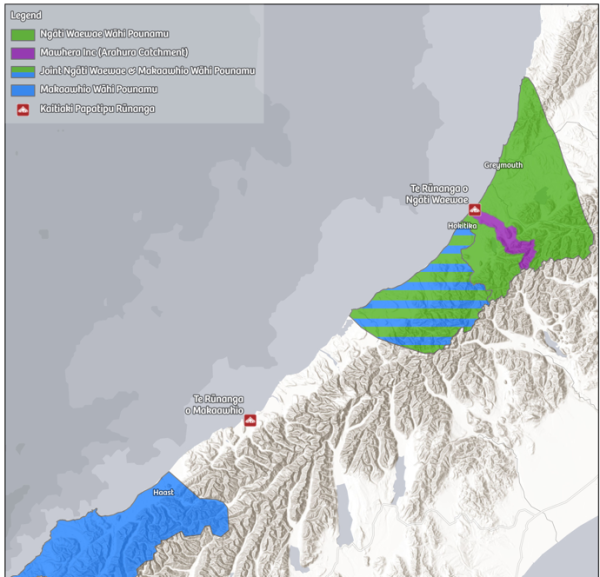
All other collection or extraction of pounamu is illegal unless authorised by the appropriate Kaitiaki Rūnanga.
Illegal activity
The taking of naturally occurring pounamu without the required authorisation is illegal. Legal remedies will be pursued where there is evidence of illegal activity as demonstrated by the following prosecution: Pounamu theft lands man in court, Dunedin | New Zealand Police.
Please direct enquiries to: [email protected]
[1] Adapted from the following source: 2002 Tribal Pounamu Management Plan, Te Rūnanga o Ngāi Tahu, Map 1 (Ngā Wāhi Pounamu and Ngā Kaitiaki Rūnanga), page 40
 Top
Top