Hiwa-i-te-Rangi: A Decade of Dreams Realised at Te Pā o Rākaihautū
Aug 4, 2025

Nā Phil Tumataroa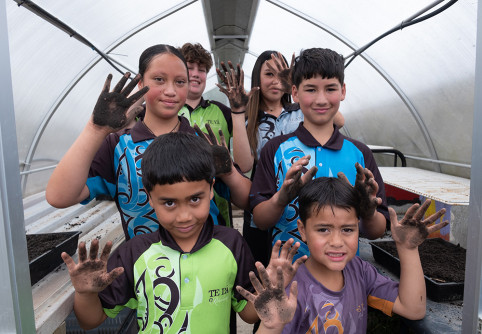 This Matariki marks 10 years since Te Pā o Rākaihautū (Te Pā) opened its gates — a decade of daring to dream big, daring to challenge the system and daring to do things differently.
It started with a bold vision, by a group of whānau whose interest was not in building a better school but about overhauling an education system failing their tamariki. Kaituhi PHIL TUMATAROA reports.
“THE QUESTIONS WE ASKED OURSELVES WERE, HOW DO WE RE-ENGAGE our whānau in learning and how do we equip them with the tools to succeed in the world,” says Chairperson Rangimarie Parata Takurua.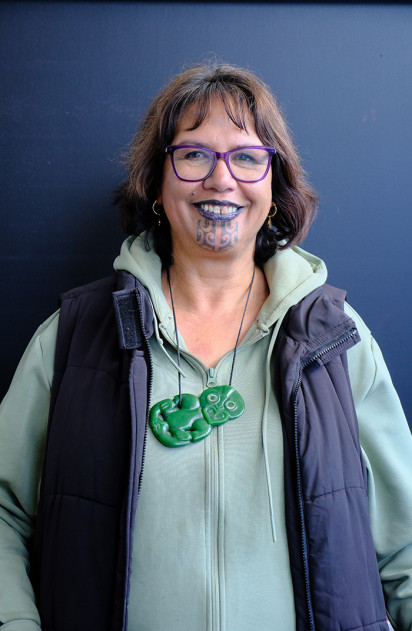
“The answers weren’t to be found in classrooms and state schooling, they lay in a model deep in our DNA, a pā wānanga – a learning village with its heart centred on whānau, whakapapa and whenua.”
Te Pā was started by Nōku Te Ao, a charitable Trust that operates two early childhood centres and a range of whānau ora services. The establishment of Nōku Te Ao was in response to a baby boom within the ranks of Te Ahikaaroa Kapa Haka in 2002. Today 70 tamariki attend Nōku Te Ao and Te Pā has a roll of approximately 240 students.
The process of establishing Te Pā began in 2011 amidst the aftermath of the earthquakes. Its founders saw a chance to not just build a new school, but to “reshape education.” It was finally approved in 2014 and opened in 2015.
“From the beginning, it was never about building another school. It was and still is – a movement to reclaim the hearts, minds and wellbeing of our tamariki and restoring our own ways of teaching and learning, grounded in whakapapa, whānau and whenua,” says Rangimarie.
At Te Pā success is not measured by decile rankings or NCEA results alone, she says it is measured in “how confident our tamariki are in the taiao, on the haka stage, on sports fields, and using a tea towel on the marae.
“As well as literacy and numeracy they learn ‘culturalcy’ – how to read the taiao, how to build a mokihi, catch tuna, grow their own kai, compost and hike the lakes carved by Rākaihautū. Their classrooms are on the whenua, on the moana, in the māra.”
Evidence shows this foundation of learning is working, with Māori student achievement at Te Pā consistently outpacing national averages.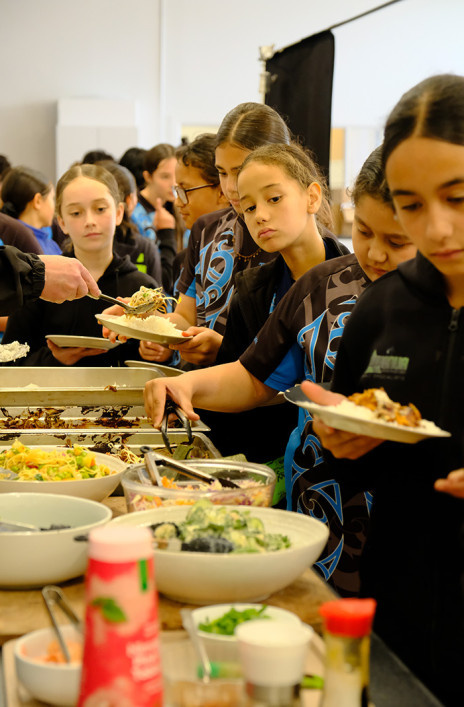
“It is the norm to see our students stay longer, achieve more; and just as importantly they emerge proud, connected, and future focused. Learning here is anchored in Aoraki Matatū, Aoraki Matatau, Aoraki Mataora. Our expectations are as high as the lofty peaks of Aoraki, whether they’re in the māra kai, on stage, or in the science lab.
We’re raising kids who know who they are — who walk strong in both worlds
Rangimarie says. Over the past 10 years Te Pā has been stuck in “temporary" earthquake-damaged buildings at the old Linwood Intermediate site wrestling with the Ministry of Education for basic infrastructure and equitable treatment.
“Even while operating in less-than-ideal conditions and battling just to be safe and warm we’ve been able to achieve remarkable results,” says Rangimarie. “We’ve never let it dim the vision.”
That vision was recognised on the world stage earlier this year when Te Pā won the Zayed Sustainability Prize in the Global High Schools category — one of the world’s most prestigious sustainability awards that received more than 5,000 international entries.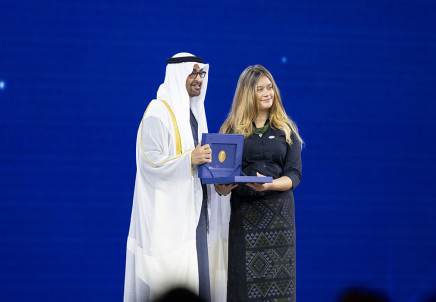
The school received $250,000 for its Puku Māra (digestive gardening) project, which blends mātauranga Māori with regenerative agriculture to tackle climate change, restore soil health, and feed whānau.
Terina Tāhau, Kaiurungi at Te Pā, took a group of Year 13 students to Abu Dhabi in January to receive the award.
“Puku Māra is more than a garden. It’s a living classroom. A place where tamariki learn to compost, grow, harvest, and heal – not just the whenua, but themselves and their community.”
Te Pā is also the first Kura-ā-Iwi in Te Waipounamu – a school that sits under the korowai of Te Hapū o Ngāti Wheke, supported by Ngāi Tahu, and driven by iwi values and aspirations – Mō tatou, ā, mō kā uri ā muri ake nei.
“Only three percent of Māori tamariki in our region have access to kaupapa Māori education. That’s unacceptable,” says Rangimarie. “But we’ve shown what’s possible when we lead our own solutions.”
Now, after years of pushing through “policy lip service” and shifting Ministry goalposts, the tide is turning. A new site has been identified at Te Waipapa, Diamond Harbour – eight hectares of ancestral whenua overlooking Whakaraupō and across to Te Poho o Tamatea.
“This whenua changes everything,” says Rangimarie. “It’s our place, our history. It’s where our pā wānanga will truly come to life.”
The vision is a dual-site school: a city-based kāika nohoaka for easy access, and a peninsula based pā wānanga at the foot of Te Ahu Pātiki in Te Pātaka o Rākaihautū. Combined, the two sites will enable Te Pā to grow and more than double its current roll.
“What’s more it will enable Te Pā to build our pā wānanga on eight hectares incorporating large scale māra kai – food orchards, gardens and composting. Working across two sites we plan to include community spaces such as a performing arts centre – spaces designed by and for whānau.”
Rangimarie is cautiously optimistic about recent progress they have made after a series of complaints led to intervention by the Minister of Education, Hon Erica Stanford.
“We’re standing on the threshold of a new dawn, but the message to the Ministry is clear – we’ve been here before. Promises are not enough. We need action, certainty, and delivery.”
 Top
Top