Mana of the mind: rethinking neurodiversity
Dec 18, 2025

Mana of the Mind: Rethinking neurodiversity
Nā, Sascha Wall
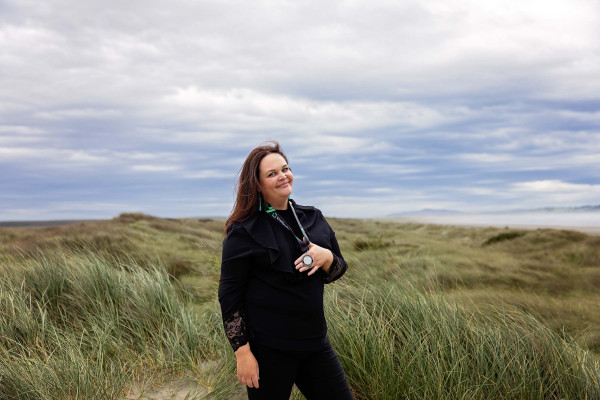
“IF YOU WANT A PROBLEM SOLVED AND YOU WANT IT SOLVED QUICKLY, find someone with dyslexia,” says Sumaria Beaton-Sikisini (Kai Tahu – Awarua) with a confident smile.
It was Sumaria’s email signature, embedded at the bottom of her response to a boring admin email I’d sent her, that first piqued my interest: “#MadeByDyslexia – expect curious ideas & curious spelling.” In one line Sumaria owned her dyslexia, framed it with positivity, and wrapped it in humour. What many may see as a challenge, she wears as a badge of creativity with confidence.
As a fellow neurodivergent I felt an instant connection and reached out. I knew our korero would carry a te ao Maori lens, shaped by our shared whakapapa to Awarua.
Dyslexic brains have a unique ability to connect seemingly unrelated ideas and find solutions quickly and creatively. Sumaria embraces this as her greatest strength. “There are some things I really struggle with that are just weird … but give me a problem and I’ll give you ten different ways to figure it out. That’s my gift.
“I’ve made my whole business work for my brain,” she says – and that mindset is a big reason Awarua Synergy, her Murihiku-based company, has thrived. Her ability to think outside the box, and several steps ahead, is what makes her an exceptional leader and business owner.
Neurodiversity is the natural spectrum of human minds – the many ways in which we think, learn, feel and experience the world. It challenges the notion of a single ‘normal’ brain and celebrates cognitive differences as part of what makes us innovative and resilient. Within this spectrum people whose brains work differently from what is considered ‘neurotypical,’ are described as neurodivergent.
Unfortunately, as Western science has evolved, neurodivergent conditions have been framed in a way that paints a picture of what a person is lacking. Labels like Attention Deficit Hyperactivity Disorder (ADHD), Autism Spectrum Disorder (ASD), and dyslexia frequently carry the weight of unspoken stereotypes – images of disruptive children throwing chairs, individuals who dodge eye-contact and lack empathy, or those who simply cannot read or write.
These harmful narratives misrepresent reality and contribute to stigma, limiting opportunities and eroding the confidence of those whose brains are wired differently. Not to undermine the struggles, there are multiple challenges with communication, sensory overload, maintaining focus – all side effects of navigating systems designed for neurotypical minds. But in reality, neurodivergent brains often bring remarkable strengths – creativity, problem-solving, innovative thinking and unique perspectives that enrich our communities, workplaces, whanau and ultimately, our lives.
Within te ao Maori there is a growing movement to reframe Aroreretini (ADHD), and Takiwataka (autism), and other neurodivergent conditions as distinct ways of being – each carrying their own mana. Aroreretini (meaning attention to many things) is the kupu Māori for ADHD which reflects the way people experience the world with an abundance (rather than a deficit) of attention spread across multiple interests.
It emphasises curiosity and adaptability rather than limitation. Takiwātaka means “in his or her own time and space”. The term, developed by Māori linguist Keri Opai, honours the unique rhythm and perspective of autistic individuals, framing autism as a different way of being rather than a disorder. It conveys respect for individuality and connection to the world on one’s own terms.
Currently, there are no confirmed kupu Māori and only limited resources that explore a te ao Maori perspective on dyslexia. To me, this highlights a gap in understanding, not just of what dyslexia is, but of its strengths and its complexity beyond the common view of it as just difficulty with reading and writing.
In kōrero with Sumaria we explored her experience of dyslexia and how she draws on te ao Maori to bring structure and clarity to her life and mahi. “Growing up I felt stupid and dumb, to be honest. But then I’d pick things up quite easy and fast. So you think, ‘Am I smart or not?’ You have to learn to trust yourself.”
That tension shaped much of her early life until diagnosis offered answers and challenges. “After I got diagnosed, I went through a phase where you kind of go through a whole filing system of your life. You’re like, oh, that’s why that happened … but it’s also a grief process because you’re grieving what wasn’t right, or what you didn’t fit into.”
For Sumaria, creating safe spaces is critical. “If there’s not a safe space for you, and instead you’re constantly getting told you’re not good enough because you’re not spelling properly, then it’s just going to crush you.”
She believes dyslexia brings unique strengths, especially in problem-solving. “We can see all the different sides and pieces. That’s why we need the big picture. Give us the big picture and we’ll see how everything connects.”
Sumaria also challenges the systems we work within. “How much space could we occupy if there was more of a te ao Maori focus on
things, rather than a Western focus?” For her, tikaka offers a blueprint for structure and balance:
“If you think of powhiri on the marae, there’s a process, step by step. Different marae might do things slightly differently, but the essence is the same: welcoming manuhiri and tangata whenua, that’s tapu. You know how it works, and that structure gives you boundaries. I reflect on that a lot because it helps my brain. It’s the same with lean management: visual, tidy, efficient. When everything around me is clear and in order, it makes sense.”
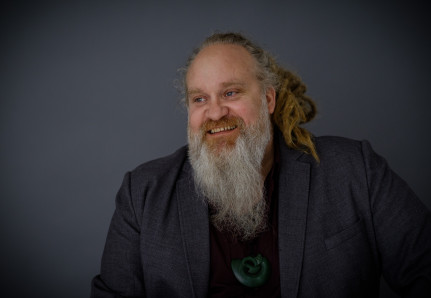 Dr Andre McLachlan Ngāti Apa (Ngāti Kauae), Muaupoko (Ngāti Pariri), champions the view that mātauraka Māori offers a holistic lens on neurodiversity, which he sees as vital for the wellbeing of tamariki, rākatahi and pakeke. A clinical psychologist and addictions specialist based in Waikato, Andre combines academic expertise with lived experience. A father of six, he is deeply committed to indigenous approaches to mental health, trauma, addictions and neurodiversity.
His work spans research, teaching, and workforce development, and he is widely recognised for delivering interactive workshops that equip practitioners and whānau with practical tools they can apply in everyday life.
When we began our kōrero, I shared my desire to reframe neurodiversity away from the deficit model. Andre gently challenged
me to think deeper. He knows this space intimately: he has ADHD and autism and his own children live with learning differences and
developmental disabilities.
“The reality of having a disability is not fun and it’s not a superpower,” he said. “Talk to any parent of a child with a disability, and they will tell you it’s f..king hard.”
Andre spoke candidly about his own experience. “For me, I have a PhD, but there are still things, normal things, I simply can’t do. However, I can write a whole book in a weekend.”
He believes the education system often gets it wrong by focusing only on what’s broken. “The problem with the mainstream education system is that it looks purely at challenges and then the focus is on fixing things. As soon as you’re fixing something you stop focusing on the development and the inherent positive aspects of that person.”
Punitive approaches, he says, only compound harm. “Punishment creates shame, disengagement, distrust of the world – you just feel
stupid.” Instead, Andre advocates for comprehensive assessments that look beyond labels. “Diagnostic overshadowing is when someone looks at someone and goes, ‘Oh, they’ve got ADHD. That’s because of ADHD.’
Everything becomes about the diagnosis, and you stop seeing the person. “A diagnosis is part of the process, but the goal is to understand who we are. A comprehensive assessment lets you know where the strengths are and where the difficulties are, and they are often different than the behaviours or the concerns we have.”
To explain his approach, Andre uses the metaphor of a wharenui. “Think about a wharenui and the structure of the whare pou holding up the tāhuhu, which is the central nervous system. All of our whare are different. Some elements are standard, some are amazing, and some are fraying at the edges. “If you take the entire story of the whare and shine a light on the things that are going OK and the things that are amazing, we can then utilise them to support the entire story of the whare.”
This philosophy underpins the resources Andre has developed for whānau and practitioners. “We’ve developed a series of those developmental abilities into a set of Mana Roto cards. They describe the elements of development and connect them to our concepts. By doing that you have a resource so you can sit with whānau and look at all of the areas of development across the four pou.”
Once strengths and challenges are identified, the next step is planning. “We’ve developed a process for creating a strength-based plan, and we’ve done that in relation to tukutuku stitches. Who are the weavers? Who are the stitches? That’s about communications and relationships. Next part of the plan is the frame that holds the tukutuku together. What are the expectations, and what’s the match between this child or adult’s ability, strengths and needs, and what’s being expected of them in the world?”
Sumaria and Andre challenge the narrow frames that have long defined neurodivergence. Their experiences reveal that what some call
limitation can become a source of insight and innovation. Sumaria’s gift for connecting ideas and Andre’s vision for strength-based planning show us that when we honour the full story of a person we discover possibilities that rigid systems will never imagine.
These kōrero remind us that the way we understand minds shapes the way we shape lives. When we choose to see complexity as richness and difference as part of the pattern, we create spaces where people can stand in their own rhythm and thrive on their own terms.
 Top
Top