The 'Shortland Pounamu'
Dec 19, 2025

The 'Shortland Pounamu'
Nā Helen Brown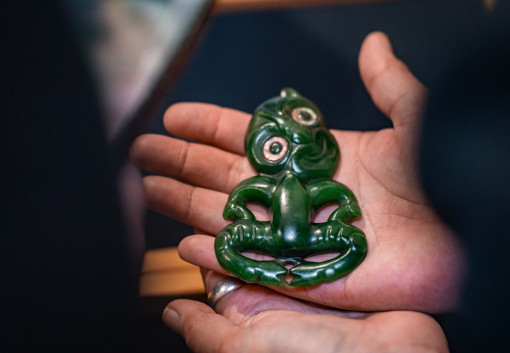
Taoka are potent connectors travelling across space, time and generations. Imbued with the whakapapa of our tīpuna, they connect our past, present and future. When taoka are gifted, they often return, generations later, to the hands of their descendants. While the colonial project with its attendant ethnographers, collectors and museums has disrupted this dynamic, sometimes taoka speak for themselves. They manage to be heard through the glass case, or in this case the shoebox – and return home.
IN THE MID-1950S THE LATE GEOFFREY DISS OF CUMBRIA, ENGLAND attended an estate sale in the Lake District near his family home.
A wooden display case caught his eye, and he bought it for the family’s jewellery business. The case came replete with a large collection of “curiosities” including bone and ivory objects, several pounamu pendants, and a magnificent hei tiki.
Diss regarded these objects as incidental and carefully stored them in a shoebox in his attic where they lay safe, albeit neglected, for a quarter of a century. Curious to know more about the hei tiki, Diss sent it to a London-based valuation company in 1976 for appraisal.
The valuer noted the significant monetary value of the taoka but also its cultural value, writing:
“The Māori regarded the tiki amulet as the most sacred … usually elaborate precautions were taken to prevent the tiki falling into the
hands of strangers.”
Diss absorbed this new information and for a time his son displayed the hei tiki and other taoka pounamu amongst his fossil, rock and gemstone collection. Diss’s daughter-in-law even lined a special wooden box to house the collection when it was not on display.
In 1983, prompted perhaps by publicity about the exhibition of Māori art the following year at New York’s Metropolitan Museum (the watershed Te Māori) or by empathy fostered through his own deep interest in family history, Diss contacted the New Zealand High Commissioner in London and generously offered to gift the pounamu to New Zealand.
He wrote: “The greenstone has just come to my notice again after lying neglected in a cupboard since 1976. The ‘tiki’ must surely feel it is amongst strangers. My wife and I feel it is time it returned home. Would you agree? If you do, we would be happy to donate the tiki and
greenstone to your Excellency, on the understanding that they would be passed on to some Māori organisation or museum who would treasure them for the future.”
The pounamu collection comprising the hei tiki, nine mau kaki (pendants) and beads arrived in NZ in January 1984 and was immediately dispatched to the National Museum (later Te Papa Tongarewa) where it was accessioned until a “final keeping place” could be found.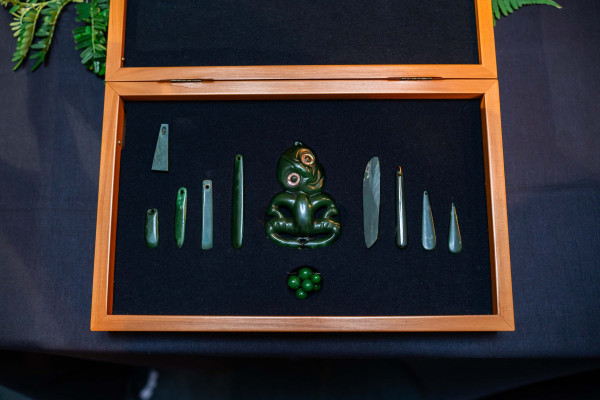
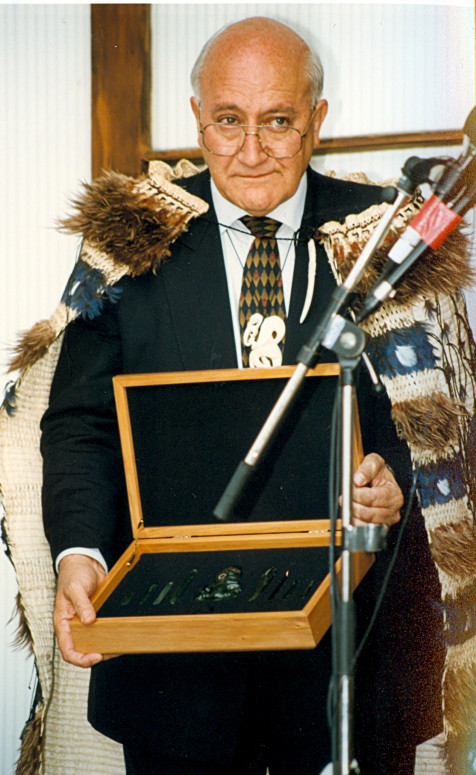
Thirteen years later, the donor’s wishes were fulfilled when the Diss collection, now described as the Shortland pounamu, was gifted by the Crown to Kai Tahu at Kaikoura on the signing of the Ngai Tahu Deed of Settlement. The gift marked the significance of the settlement of Te Kereme, and remains an important symbol of Te Tiriti relationship between Kāi Tahu and the Crown.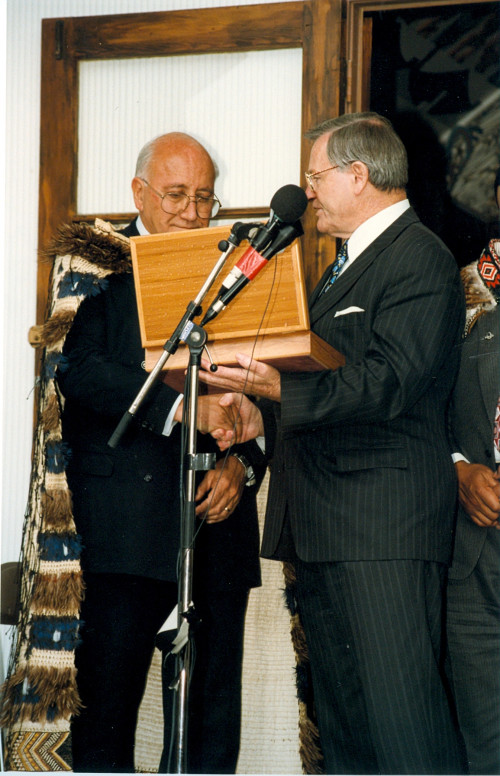
While the Shortland pounamu is symbolically tied to that critical moment in our tribal history, the hei tiki in particular has even deeper
layers of historical and cultural significance for Kāi Tahu whānui.
The provenance of the mau kaki is unknown and the beads are not of NZ origin, but the hei tiki is believed to have been gifted to the English physician Edward Shortland, whose name has come to be associated with the entire collection.
Shortland was appointed private secretary to Governor Hobson in 1841-42. During his tenure he travelled with Hobson throughout the
Waikato, and developed a keen interest in te ao Māori.
Shortland further honed his command of te reo Maori and his familiarity with tikaka as Police Magistrate and Sub-Protector of Aborigines in the Bay of Plenty. In August 1843, he was appointed official interpreter to Colonel Godfrey who was the Land Claims.
Commissioner appointed to investigate pre-Treaty Maori land sales. In this role Shortland visited Te Waipounamu for the first time, attending claim hearings at Akaroa and Otago. He then travelled around Murihiku and Otago in 1843-44 as the government-appointed Sub-Protector of Aborigines, investigating land claims in Te Waipounamu and taking a census.
As he passed through the district, Shortland meticulously observed daily life and met Kāi Tahu rakatira including Tuhawaiki, Kāretai, Topi Patuki and Huruhuru. He returned to England in 1846 and published an account of his travels, The Southern Districts of New Zealand, in 1851.
Shortland maintained an ongoing connection with NZ, taking up various government posts in the North Island on three occasions between 1862 and 1889 before his death at Plympton, Devon, in 1893.
Much of the information Shortland recorded was later used by Kāi Tahu as important evidence for Te Kereme. His observations continue to inform the work of our tribal historians and are an important source for Ka Huru Manu.
While there is no record of Kai Tahu gifting the hei tiki directly to Shortland, the taoka is certainly of southern origin; the raised tab for the suspension hole at the top of the head is a stylistic feature indicative of hei tiki made in Te Waipounamu. Fashioned from stone tools during Te Ao Kohatu, the hei tiki exhibits very high-quality artisanship.
Indeed, our pounamu experts have described it as a flawless example, made even more significant by its association with Shortland whose compassionate, progressive and humanitarian regard for Kāi Tahu and Māori katoa was rare amongst the early colonial administrators.
As an agent of the Protectorate of Aborigines, Shortland was charged with the task of defending the rights of Maori as enshrined
in Te Tiriti o Waitangi.
The Protectorate operated for just six years, but its duty was to give effect to a set of humanitarian ideals outlined in an 1837 report by a House of Commons select committee that had expressed concern over the effect colonisation had on indigenous peoples, and recommended they ought to be protected.
Shortland recognised our shared humanity, refused the then prevalent pseudo-scientific notion of racial inferiority (at least, as regards
Māori), and believed Māori “must always have a political weight in their own country.” A cultural outlier, he was one of the first members of that special class whom Tā Tipene O’Regan fondly describes as “Friends
of Kāi Tahu.” Such people continue to move amongst us – our non- Kāi Tahu allies, advisers, colleagues and friends.
In July this year, the Shortland pounamu was formally returned to Te Runanga o Ngāi Tahu from Southland Museum and Art Gallery Niho o te Taniwha, where it has been on long-term loan for more than 20 years.
Representatives of Te Kupeka Tiaki Taoka Southern Regional Collections Trust, Southland Museum and Art Gallery Niho o te Taniwha, and Invercargill City Council accompanied the pounamu onto Te Rau Aroha Marae where it was received during a pōwhiri on behalf of Te Runanga o Ngāi Tahu by Tā Tipene and Kaiwhakahaere Justin Tipa.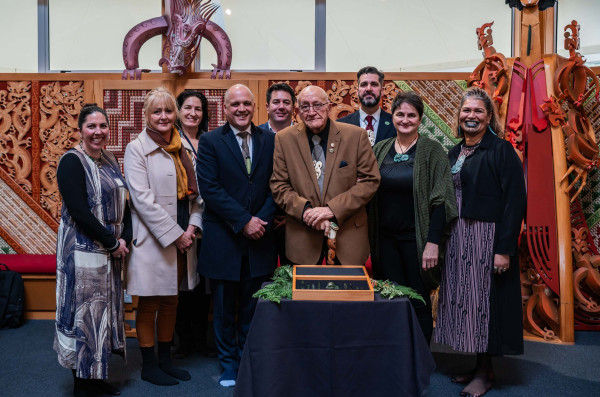
The handover was poignant as it recalled the occasion 28 years earlier at Takahanga Marae in Kaikoura, on November 21 1997, when
Tā Tipene accepted the pounamu on behalf of Kāi Tahu whānui from then Prime Minister Jim Bolger at the signing of the Ngai Tahu Deed of Settlement.
The Shortland pounamu is currently on display as part of the exhibition of the Kāi Tahu deeds, Ka Whakatauraki: The Promises
at Te Puna o Waiwhetū Christchurch Art Gallery, until February 2027.
 Top
Top