Nourishing Te Matakuraka o Kā Tamariki Nō Murihiku
Aug 19, 2026

NOURISHING TE MĀTAURAKI O KĀ TAMARIKI NŌ MURIHIKU
Nā ALANA DIXON
SWOLLEN, BOUND, AND WITH THE TEXTURE OF THE OCEAN STILL ON them, pōhā appear as though they are living. Some are glossy, others wrinkled and folded like weathered leather, each carries its own distinct shade somewhere between bronze and black.
The journey of the pōhā begins where the wind comes whistling hard off the water, and the swell heaves giant ribbons of rimurapa – bull kelp – from the jagged rocks of the southern coastline. It calls on knowledge handed down from one generation to the next, passed from a weathered hand to one that is soft in its youth. Learned before it is ever taught.
Te Pōhā Mātauraka o Murihiku (Te Pōhā) is a rūnaka-led mātauraka collaboration between Waihōpai, Awarua and Ōraka Aparima. Project manager Keri Milne-Ihimaera says it was matua Gary Davis, from Ōraka Aparima, who suggested the name for the kaupapa to reflect its role in nourishing the knowledge of tamariki mokopuna of Murihiku.
It instantly made sense.
“Our tītī tradition is only here – so the pōhā being that traditional way of storing food is something that is just here in our takiwā. We wanted to have a name that reflected our Murihiku identity and couldn’t be confused with anywhere else. You go into the pōhā when you need to, and you take out of the pōhā what you need – so it is likening the tītī to the abundance of knowledge,” Keri says.
Rolled out in schools at the beginning of 2025, Te Pōhā is an educational contact point designed to enable kura to support, promote, and preserve mātauraka Māori within the takiwā.
Working with Keri are two kaihāpai mātauraka, Raiha Johnson and Wiki Burdon (both locally-trained kaiako), and project coordinator Antonia Notoa. Together they have created something new and intentional for the deep south.
After returning home to Murihiku about five years ago, Keri was struck by how inconsistently te reo and mātauraka Māori were embedded within the schooling and education framework of the deep south. At the time, she was a trustee for Awarua Rūnaka. She realised other rūnaka were also facing the same challenges in education – and
that in order to bring change to life, the kaupapa needed to be bigger, its reach further.
Early kōrero centred on whether the Papatipu Rūnaka ki Murihiku could work collectively to shape educational outcomes for ākoka within the region. The idea, Keri says, was simple: if each rūnaka was ultimately striving for the same aspirations, why not build something shared across the takiwā?
“We started by saying, what are the things we’d like our tamariki and mokopuna to have?”
What has emerged is an initiative that has seen Waihōpai, Awarua, and Ōraka Aparima leaders and whānau being given the opportunity to direct the learning of Southland’s children, to ensure place-specific narratives and knowledge is shaped and shared within schools. “That approach has ensured that the knowledge being passed on is both culturally accurate and authentic,” Keri says
The programme unfolds progressively over three years – beginning with Kāi Tahu creation narratives, and an introduction to te reo, tikaka, and Te Tiriti o Waitangi foundations, before moving into deeper and more localised kōrero that explore mahika kai, culturally significant places and waterways, Te Kerēme, local pūrākau and narratives specific
to the histories and stories of each rūnaka. All three years support ākoka learning about tākata rokonui from Murihiku, and the contributions they made in shaping the takiwā.
“You can go into a number of schools and see a picture representing Te Tiriti – but instead of seeing a picture of the ship off Ruapuke, you see the chiefs in the tent at Waitangi. That’s part of the story, but it’s not our story,” Keri says.
“If you’re a Bluff kid and you’re learning about Motupōhue, you can literally see the mauka. It’s already part of who you are, but knowing its story is what makes that come alive. We are intrinsically connected to the whenua. This is who we are, this is who we always have been, and this is who we will always be. It helps our kids understand their absolute connection to their whenua, learn about their stories, and make sense of the environment around them.”
Less than two years on, Te Pōhā is working with almost half the schools in Murihiku, making up 61 percent of the region’s ākoka. Of the schools registered with the kaupapa, a staggering 85 percent of Te Pōhā kura have a student body where at least 40 percent of Māori tamariki identify as Kāi Tahu.
Waverley Park School in Invercargill is one kura that has eagerly embraced the kaupapa.
Principal Kerry Hawkins says Māori ākoka make up the single largest proportion of tamariki within its school community, with about 50 percent of its learners identifying as Māori and one in five having Kāi Tahu whakapapa.
Principal Kerry Hawkins says Māori ākoka make up the single largest proportion of tamariki within its school community, with about 50 percent of its learners identifying as Māori and one in five having Kāi Tahu whakapapa.
“We’ve worked hard throughout the last decade or so to ensure we started going down a more Māori-centric, tikanga path. As we’ve recruited staff over the years, we’ve really looked for people who can contribute to the kaupapa, and we’ve had a Board of Trustees right behind it.”
For Waverley Park, Te Pōhā landed at the right moment to build on this momentum. “What Te Pōhā has done is come along and provided some absolutely smashing icing to put on an already existing cake,” says Kerry. “The whole idea behind it is for our Kāi Tahu iwi to share their knowledge and resources pertaining to here, even things like the dialect in the south. It’s been absolutely golden getting hold of iwi-specific resources. Giving the kids that knowledge and connection, and knowing it’s accurate, is really powerful and it contributes massively to connecting our tamariki to this whenua.
“Even for the non-Kāi Tahu kids, there’s a real sense of pride because they’re learning about local whenua, local histories, local traditions. It all fosters a stronger connection to the place they call home now, and that extends beyond them. For our staff, it’s helping to give them confidence that they know the stories and traditions of this area, too – that’s suprisingly powerful.”
According to Kerry, the results speak for themselves. “By valuing things Māori, we’ve seen kids – and by extension their whānau – grow into their culture, have pride in their culture, and pride in themselves,” he says. “It shows up in the academic data as well. Our Māori learners do at least as well as, if not better, than our non-Māori cohort. That’s not subjective opinion, it’s verified by standardised testing and all of those other benchmarks. Te Pōhā is the Rolls Royce of resources, as far as I’m concerned.”
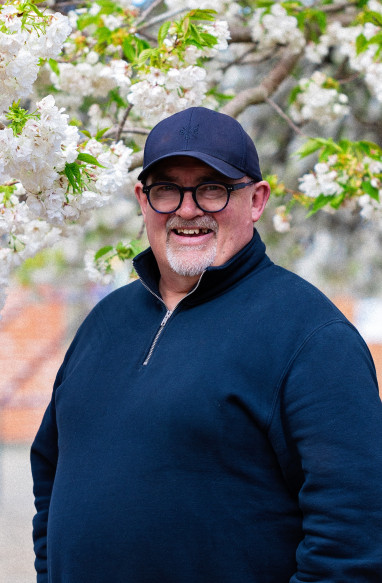 Kerry Hawkins, Principal Waverley Park School Invercargill
“From that kōrero with rūnaka, and the aspirations of the pōua and taua, for us it’s leading – and it’s definitely echoed from our kura involved – around that transformational change. It was great for our rūnaka to collectively lead that,” Raiha says. “Gary Davis was a massive driver of that, not only from a rūnaka perspective but as principal of Te Wharekura o Arowhenua. He’d seen the mahi that had been done, in little pockets of individual spaces, but recognised this was a way for the rūnaka to pull together.”
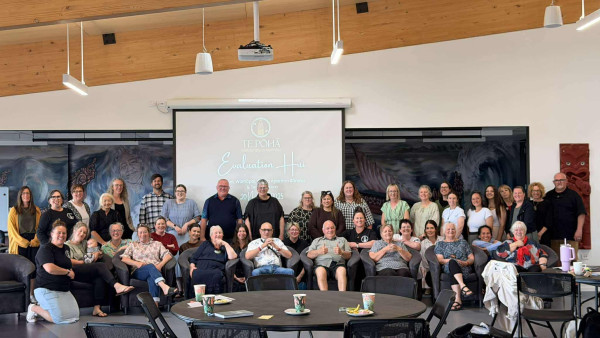 Rūnaka representatives, tumuaki, kaiako and Te Pōhā team at the end of Year 1 kā rūnaka and kura evaluation hui, November 2025, Murihiku Marae. PHOTOGRAPH: ANTONIA NOTOA
Left: Te Pōhā team’s pōhā with mauri stones from each of the rūnaka involved in the kaupapa. PHOTOGRAPH: JAIME SMITH
The commitment from schools, she says, is a huge part of driving Te Pōhā forward. “These schools are so committed – they’re sending two, five, eight teachers to attend each of our Te Pōhā personal learning development opportunities – in year one, that’s about being at the marae, year two is about going out to the whenua – and then their job is to pass on to their colleagues so that we are building the internal capacity within a school to make a long-term change. They’ve got to really commit to making the change within their own ranks – that’s probably the biggest difference,” she says.
Wiki Burdon says the kōrero shared by kura reiterates that the longed-for change is slowly, but surely, making its way through the heart of each school’s community.
“In Term Four last year, all of the schools on the journey had to come to an evaluation hui on the marae, and share back their kōrero to the rūnaka. Every single school shared a snippet of kōrero that really reinforced the difference it was making. It was really beautiful,” she says.
“The rūnaka whānau loved it, and it was so reciprocal. The love our rūnaka whānau felt, after hearing these beautiful stories from each kura and being able to speak to the kaiako doing the mahi, filled their kete also. It really showed that Te Pōhā is being used in a way that’s having an impact on everybody, which is what our pōua and taua had hoped for.” Keri believes that meaningful, lasting change will ricochet years down the line.
“I have seen what happens when children who, before, didn’t see who they inherently are reflected back at themselves, see a beacon of hope. I’ve seen real lightbulb moments in tamariki, and it’s beautiful to watch – this reclamation of identity,” she says.
Wiki Burdon says the kōrero shared by kura reiterates that the longed-for change is slowly, but surely, making its way through the heart of each school’s community.
“In Term Four last year, all of the schools on the journey had to come to an evaluation hui on the marae, and share back their kōrero to the rūnaka. Every single school shared a snippet of kōrero that really reinforced the difference it was making. It was really beautiful,” she says.
“The rūnaka whānau loved it, and it was so reciprocal. The love our rūnaka whānau felt, after hearing these beautiful stories from each kura and being able to speak to the kaiako doing the mahi, filled their kete also. It really showed that Te Pōhā is being used in a way that’s having an impact on everybody, which is what our pōua and taua had hoped for.” Keri believes that meaningful, lasting change will ricochet years down the line.
“I have seen what happens when children who, before, didn’t see who they inherently are reflected back at themselves, see a beacon of hope. I’ve seen real lightbulb moments in tamariki, and it’s beautiful to watch – this reclamation of identity,” she says.
“What we are doing now with Te Pōhā is about restoring the balance. We’ve been absent from the conversation about what works for Māori children for far too long. There is a lot of research, from New Zealand and from around the world, that shows once children are given a space to feel valued and important, then their academic results progress, their sense of leadership will progress, and their knowledge of things Māori will progress – which they’ll then pass on to their own whānau.
Māori will progress – which they’ll then pass on to their own whānau. The flow-on effects are so important, not only in today’s perspective but for generations to come. It just can’t be left anymore.” That sense of urgency shapes how Keri and the team behind Te Pōhā think about what comes next.
“Think of 20 years from now, when we’ve got children who are culturally confident, who come into their local school expecting this.
The lightbulbs are no longer going off. They’re already on, and the world is their oyster.”
 Top
Top