REVIEW: Imagining Decolonisation
Aug 18, 2026

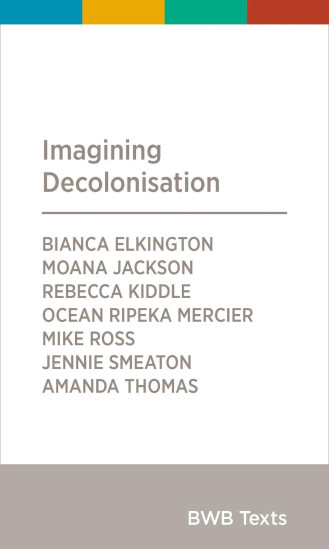
IMAGINING DECOLONISATION
Nā BIANCA ELKINGTON, MOANA JACKSON, REBECCA KIDDLE, OCEAN RIPEKA MERCIER, MIKE ROSS, JENNIE SMEATON, AMANDA THOMAS
PUBLISHER: BWB TEXTS
RRP $20.00
REVIEW nā IRIHAPETI WELLS
Imagining Decolonisation is a must-read for every person in Aotearoa. It does not matter which part of the decolonisation haereka you’re on, whether you’re fully on the waka or fear what it means for you. Despite being pocket-sized, Bianca Elkington, Moana Jackson, et al., have produced a book that is thought-provoking, educational, and tackles deeply complex kaupapa.
Through a series of interconnected chapters (each by a different author), this pukapuka explores the ongoing presence of colonisation in Aotearoa. It challenges common misunderstandings regarding decolonisation and discusses our deeply rooted systemic issues, from our health statistics to our current capitalist state. It also highlights the complexity of the term ‘decolonisation’ as a term that is difficult to define. The authors embrace this, focussing an entire chapter on demystifying what it means, but specifically what it could mean for the future of Aotearoa.
The authors’ ability to discuss these complex issues in a digestible manner, all without feeling overwhelming, needs to be acknowledged. I really appreciated their use of personal whakapapa and experiences to reinforce what was being discussed. This brought a strong te ao Māori lens to the way the discussion was considered and written.
As someone who has read several pukapuka regarding colonisation in Aotearoa, Imagining Decolonisation was a breath of fresh air. Although previous works surrounding colonisation hold mana in their own right, I am generally left with a feeling of anxiety and disappointment with the question of “so what’s next?” and “what can I do?” This book responded to those questions and left me feeling hopeful. It provides actionable steps that each of us can take in our everyday lives to inform better outcomes in Aotearoa New Zealand.
The authors understand that the term ‘decolonisation’ can seem scary, especially by those deemed as the colonisers. They approach the topic with this context seeking to open the minds of readers to the benefits of decolonisation for all who call this country home. As the title of Chapter 3 states, “Colonisation sucks for everyone.”
Decolonisation starts in the mind. It is a shared responsibility and involves critical self-reflection. As this book teaches us, reading, discussing, and thinking about these topics are forms of decolonisation themselves. Whether you need to refocus on what decolonisation can look like, or if you want an educational pukapuka with an incredible haereka highlighting bravery, struggle, and hope, Imagining Decolonisation will leave you with a refreshed perspective on how we move forward together.
 Top
Top