Tikaka hou, oraka hou - changing habits, changing lives
Aug 19, 2026


TIKAKA HOU, ORAKA HOU - CHANGING HABITS, CHANGING LIVES
When it was founded two decades ago, Whai Rawa was making a promise that went well beyond financial returns. Twenty years on, with over 38,500 members and funds under management sitting at over $210 million, that promise is being kept – one small, steady contribution at a time. Nā ANNA BRANKIN.
WHAI RAWA WAS ESTABLISHED IN 2006 AS A MANAGED INVESTMENT scheme for Kāi Tahu whānau, designed to provide support at three key life stages: tertiary education, first home purchase and retirement from age 55. And with accounts able to be opened from birth, it is, as general manager Sam Kellar (Kāi Tahu – Moeraki, Taumutu) describes it, an investment scheme quite unlike any other.
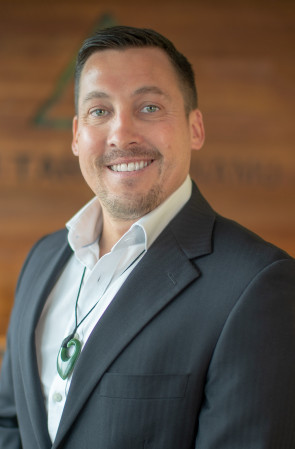 Above: Whai Rawa general manager Sam Kellar. PHOTOGRAPHS: SUPPLIED
“I’ve worked in the industry for a while, more traditional investment schemes which generally cater for a certain target market – financially well-off people with a lot of money to invest, often older,” he says.
“For Whai Rawa, it is very much about trying to get participation from a young age, which I think is really cool. The average age of our members is 30, and about half are aged 25 and under,” he says. “It’s very different to other investment schemes which are often targeted at older people.” This is very much by design, with a newborn distribution incentivising parents to enrol tamariki before they turn one, and a 4:1 matched savings rate for members under 16.
Whai Rawa chair Anthony Bow spent seven years as a director before taking on the role as chair just over a year ago, and has seen the scheme grow from roughly $55 million to over $200 million – and he says that growth is a sign of the scheme’s success. “It’s what we call the ‘hockey stick effect’ – growth started off slow over the first 10 years, then we hit $100 million, and then doubled again due to the compounding effect of investment,” he says. “It always takes longer than you think to start with, but once it gets going, it starts to grow pretty fast.”
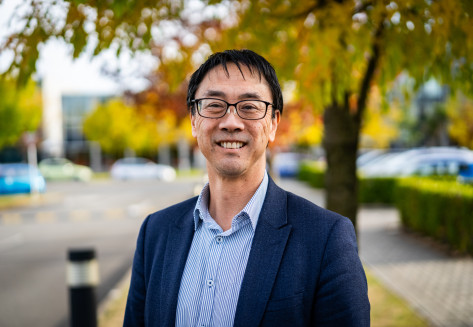 Above: Whai Rawa chair Anthony Bow. PHOTOGRAPHS: SUPPLIED
This trajectory encapsulates exactly what Whai Rawa is intended to do: plant seeds early and let time do the work. Anthony refers to the Whai Rawa whakataukī – tikaka hou, oraka hou, changing habits, changing lives – as well as the iwi whakataukī – mō tātou, ā, mō kā uri ā muri ake nei, for us and our children after us. “It can take a generation to change people’s mindsets,” he says, “but that intergenerational thinking is exactly what Whai Rawa is built on.”
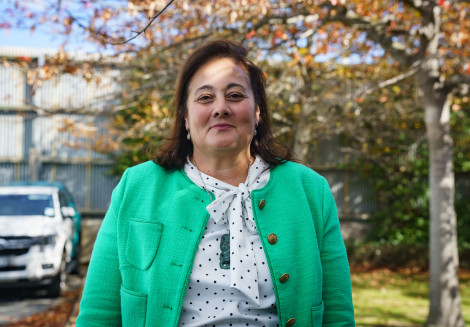
Deputy chair Juliet Tainui-Hernandez (Kāi Tahu – Ōnuku) echoes this sense of legacy as she reflects on the scheme’s origins. “Tahu Pōtiki’s vision for Whai Rawa was not just as an investment fund, but as a direct intergenerational prosperity initiative for Kāi Tahu whānau,” she says. “It continues to deliver that, as well as growing our collective financial literacy and confidence. Every contribution, no matter how small, is an investment in the future opportunities, resilience and wellbeing of our whānau.”
Both Anthony and Sam note one of the scheme’s more radical features in relation to others: the fact that withdrawals are not a failure – they are the point. “It’s the only investment scheme I’ve worked at where we celebrate money going out the door, because it means our members are achieving their life goals,” says Sam. Anthony agrees, saying: “If we didn’t allow withdrawals, we might be closer to $300 million, and some other schemes would consider that a failure. But we look at the more
than $50 million that has been withdrawn and know that it has been for really important purposes.”
Perhaps the most distinctive feature of the scheme is the fact that members are encouraged to contribute not only to their own accounts, but to those of their whānau – and the data shows they do. The savings rate for tamariki members sits at around 65 percent, higher than the adult rate, because whānau are actively prioritising the next generation over themselves. “We’re seeing parents, aunties, uncles, grandparents prioritising saving into tamariki accounts over their own,” Sam says.
One member, he notes, contributes to around 20 of her grandchildren’s accounts. It is, he reflects, “quite selfless” – and it is also distinctly Māori – and exactly what the scheme was designed to do.
Whai Rawa is in the midst of a strategic reset aligned with Mō Kā Uri, the iwi’s broader vision, and is looking at how to optimise returns, and provide a broader suite of financial services for whānau. Sam says the team is considering how to make the criteria for first home withdrawals more flexible to better reflect the realities of Māori land tenure and papakāika. “We want to make sure that we’re still relevant, and that the definition of ‘home’ reflects our cultural nuances.”
When TE KARAKA celebrated 10 years of Whai Rawa in 2016, we shared the stories of Toya Woodgate and Riana Tamati. A decade later, we revisited them to hear how Whai Rawa has continued to shape their financial habits and create opportunities.
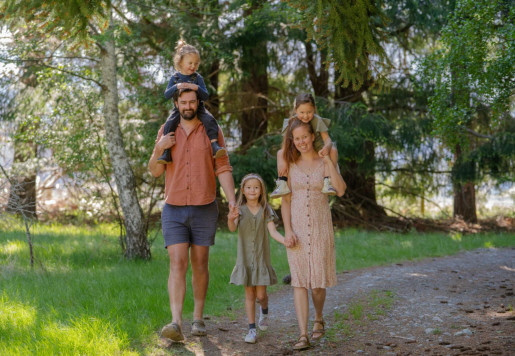
Toya Woodgate was just 22 when she and her partner Callum used her Whai Rawa account as part of the deposit on their first home in Leeston in 2015 – a moment she described at the time as still feeling like a dream. Today she is a mother of three (Lillian, Adeline and Finley), living in Fairlie. That first house, renovated steadily over seven years, was sold at the peak of the housing market – netting a decent profit.
“What we did with our first home has definitely set us up for our second home,” Toya reflects. “Being able to buy when we did, which wouldn’t have been possible without Whai Rawa, meant we were in a really good position to capitalise on it when we were ready to upsize.”
When Toya considers what her children might be able to accrue – having had their accounts open since birth – she is blown away. “My mum contributes a couple of dollars to each of their accounts every week, and their great-grandmother gives $20 every birthday,” she says. “It’ll build up to something quite meaningful by the time they’re old enough to withdraw.”
Beyond the pūtea in their accounts, Whai Rawa has also shaped the way the whānau think about money. “I was so lucky that Mum was working at Ngāi Tahu when it opened and got me involved, because it’s taught me more about finances than anything else,” she says. “It pushed me to get more knowledgeable about other investments, and setting up multiple funds as well as just being more mindful with our money.”
Toya says she regularly talks to her kids about ways to do this – buying second hand, selling one thing before buying another, considering budgets. “I want them to understand that they are already very rich in life, and that money is about security, not stuff.”
Ten years ago, Riana Tamati (Kāi Tahu – Makaawhio) was a mother of two with a firm belief in what the scheme could do for her kids. Since then, she has navigated a divorce, started her own business, and blended a new family – and Whai Rawa has been with her through all of it.
The period of separation, she says, was helped by an unexpected reassurance from Whai Rawa. Although she didn’t end up needing to access it, she knew that her savings were there, able to be withdrawn in the case of true financial hardship. “It gave me peace of mind. I had access to it for myself and our tamariki. I was grateful for my stubbornness and determination over the years. I was grateful I stayed true to what the whole purpose of it is for.”
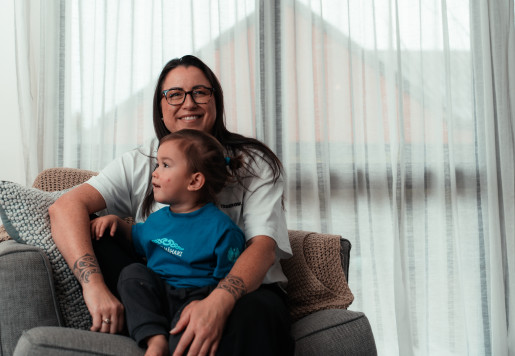
Riana’s blended whānau of five tamariki reflects a complexity the scheme cannot fully reach. Her children Ryan, Maia and Taiāwhio all have Whai Rawa accounts opened from birth, but her two step-children, who do not whakapapa to Kāi Tahu, are not eligible. Rather than a source of division, Riana has found a way to make the scheme’s resources a shared resource for the whole household. The Ngā Kaitiaki Moni pānui – Whai Rawa’s financial literacy programme for tamariki aged 5 to 12 – arrive for her eligible children and end up on the table for everyone. “It may be such a small activity,” she says, “but it’s quite meaningful because it’s around pūtea – about what it is, what it does and how it grows.”
Riana is also a business owner who has become actively engaged in Whai Rawa’s community initiatives – including sitting on a panel for He Matapaki Māreikura, a financial education programme for wāhine. “I shared my whakaaro around savings in a business sense and in a whānau sense,” she says. “Those panels were great because there was a true sense of transparency. Everyone’s experience is different and then some experiences are so aligned.” She has a clear view on why a wāhine-specific space matters: “We’re so often the ones giving up career opportunities to raise families, yet we’re also the ones dealing with a lot of financial decision-making for the household,” she says.
“We are navigating multiple levels of stuff, all with financial implications. Our monetary relationships come from a personal, business and emotional sense, and that’s not often shared out loud. It’s really important that Whai Rawa has created that space.”
The third whānau story in this anniversary piece is a new one. Judith Thorpe has been a member since Whai Rawa’s early days, contributing the same way most long-term members do – a small automatic payment each pay period. “Enough to make sure I received my matched savings every year, plus a little bit more whenever I could manage it,” she says. By her late fifties, Judith was ready to downsize into a retirement unit in Hokitika. She was determined to be mortgage free, and needed about $30,000 to bridge the gap between the proceeds from the sale of her house and the cost of the unit. “I said to myself, I’m just going to have to look under all the couch cushions,” she laughs. “In the end, my Whai Rawa savings made a huge difference. I did it at the right time, and I am very lucky.”
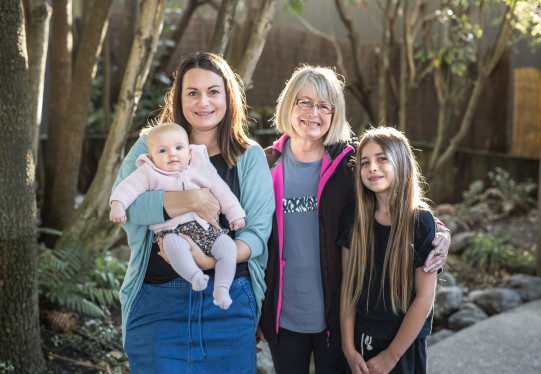
The retirement age of 55 was, Judith says, the game-changer. “Sometimes you just need to be able to access money earlier than 65.” By her late fifties, mortgage-free and in her new home, she is still working part-time – not because she has to, but because she wants to. “Mostly so I can keep contributing to my grandchildren’s Whai Rawa accounts.”
Judith’s advice to anyone not yet enrolled is clear: “I’m a big advocate. I tell everybody, everybody. It’s a way to help your kids and your grandkids. Just take every advantage that’s given to you.
Twenty years in, Whai Rawa has become something more than an invsetment scheme. It is often the most tangible connection a whānau member has with Kāi Tahu – especially those living far from Te Waipounamu. The next 20 years will see that connection deepen, as tamariki who have been enrolled since birth begin to reach those
first key milestones – attending university, buying their first homes – with nest eggs their parents could only have dreamed of. Tikaka hou, oraka hou.
 Top
Top