Whakaora Te Waikēkēwai
Aug 19, 2026

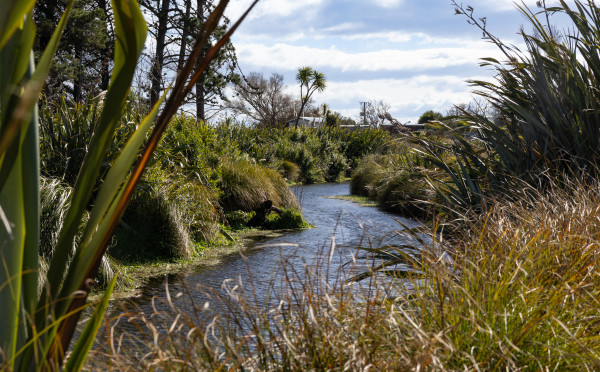 Waikekewai Stream, Te Pā o Moki. PHOTOGRAPH: KATHRYN TAYLOR PHOTOGRAPHY
WHAKAORA TE WAIKĒKĒWAI
An award-winning five-year project to restore the catchment along Waikēkēwai Stream on the southwestern edge of Te Waihora has been completed. Led by Te Taumutu Rūnanga, in partnership with Environment Canterbury and funded by the Ministry for the Environment’s Freshwater Improvement Fund, and governedby the Te Waihora Co-Governance Group, Whakaora Te Waikēkēwai stands as a powerful example of what mana whenua-led, voluntary co-governance can achieve. Kaituhi ILA COUCH reports.
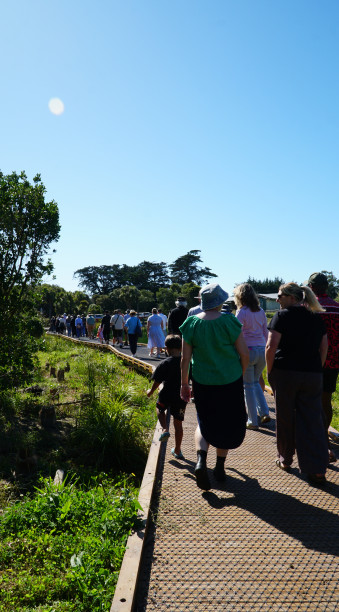
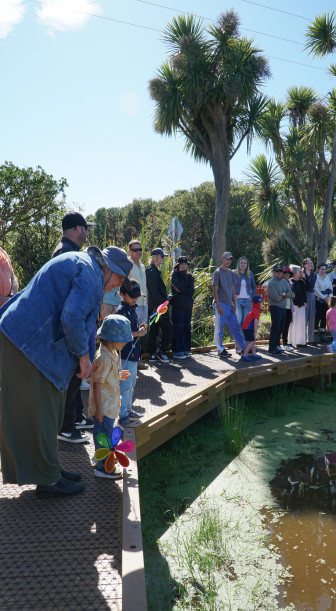
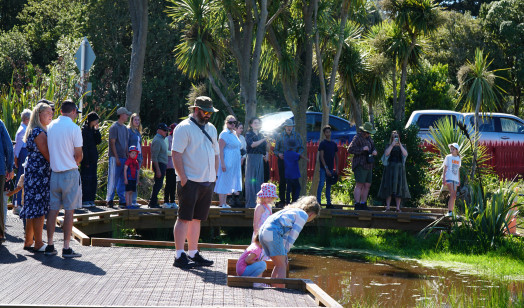
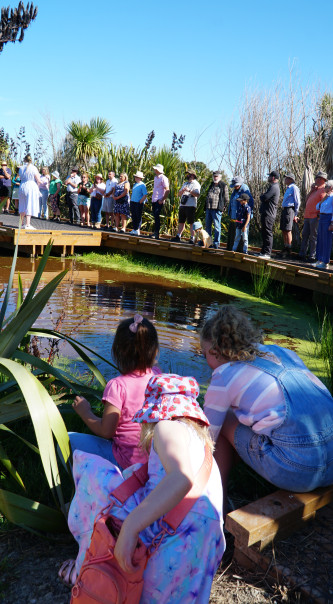 Above: Ngāti Moki Marae hosts a celebration of the mahi completed as part of Whakaora Te Waikēkēwai, including Te Repo o Papatahora,
a traditional wetland on whānau-owned land adjacent to the marae. PHOTOGRAPHS ILA COUCH
Mā whero, mā pako; ka oti ai te mahi
A MĀPUNGA (BLACK SHAG) FLIES OVER THE PŌWHIRI IN PROGRESS AT Te Pā o Moki, a tohu for the day as manuhiri and mana whenua gather to celebrate the achievements of a significant wetland restoration project, Whakaora Te Waikēkēwai.
Waikēkēwai Stream extends six kilometres upstream from Te Pā o Moki, and over the past five years, Te Taumutu Rūnanga has led its restoration. What makes Whakaora Te Waikēkēwai special is that it is the first project of its kind in Aotearoa, co-designed and co-managed by rūnanga and local government.
Flowing through the ancestral pā of Te Ruahikihiki and his son Moki II, Waikēkēwai Stream is a whakapapa connector for the rūnanga. Once a great mahinga kai site, the awa meandered through rich wetlands before reaching Te Waihora. Following European settlement, the catchment landscape was converted to farmland, and as a result, the wetlands disappeared, the water course changed, and the water quality became severely degraded. Opportunities to gather mahinga kai were lost, but the moemoeā of the hapū to restore the mana, mauri, and ecosystem of Te Waihora and its catchment has never wavered.
Over cups of tī and kai, the rōpū have time to mingle before assembling for a group photo. From there, they head toward Te Repo o Papatahora, a traditional wetland on whānau-owned land adjacent to the marae. The sun glistens on the water and tamariki, under the watchful eye of their mātua, lean perilously close to the edge of the repo, looking for signs of life.
Taumutu Project Lead Sophie McGregor addresses the rōpū from the viewing platform. “This was a dry paddock, but once we started taking out the trees, it started reverting into a wetland. We’ve got the wooden boardwalk along this side, and it connects to what will be a grass pathway to allow for a full 360-degree view of the wetlands. We’re seeing kōtuku flying around the marae, where there weren’t any a year ago. I haven’t seen a bittern yet, but one has been seen here at the marae. It’s nice to be able to see the benefits of this mahi for whānau, hapū, community and iwi because the environment should be for everyone. Water should be for everyone.”
Sisters, Bridget and Rachel Robilliard, stroll along the boardwalk with their tamariki. Bridget holds her tama close, Rachel swings her tamāhine out and over the water. Both work in the environmental space: tuakana Bridget in environmental law, teina Rachel in landscape architecture. In 2013, when Bridget was still a student, she was contracted by Taumutu to prepare a long-term restoration plan based on the visions and aspirations of the hapū.
“I was very much brought up with the fight for the health of our awa being passed down from my tīpuna,” says Bridget. “Mahinga kai and Te Waihora are who we are as Taumutu whānau, but our identity wasn’t reflected in what our whenua had become. My Aunty, Cath Brown, talked about swimming in the lake growing up, and how it was clear.”
The restoration plan started with a whānau hīkoi around the Waikēkēwai catchment. “The section of awa that runs behind the marae was all retained with concrete power poles. It was so far from the values we held and the aspirations we wanted. That hīkoi with whānau, and the kōrero around the history of our sites fed into the mahi that’s happened with Waikēkēwai – creating a healthy habitat, having the whenua look and function the way we want it to, and restoring the mauri of the water.”
The pathway to realising hapū aspirations for Waikēkēwai began in 2012, when Te Rūnanga o Ngāi Tahu and Environment Canterbury signed the Te Waihora Co-Governance agreement – the only voluntary co-governance agreement for a water body in Aotearoa. The partnership grew over time: Selwyn District Council joined in 2014, Christchurch City Council in 2016, and the Department of Conservation Te Papa Atawhai in 2019. Their shared vision – to restore and rejuvenate the mana, mauri, and ecosystem health of Te Waihora and its catchment – is pursued through Whakaora Te Waihora, the long-term ecological and cultural restoration programme under which the Whakaora Te Waikēkēwai project was born.
The application to the Ministry for the Environment’s Freshwater Improvement Fund in 2021 was a success. Te Taumutu Rūnanga and Environment Canterbury, under the banner of Whakaora Te Waihora, got to work fulfilling the objectives of the project: enhancing mahinga kai habitat, improving water quality, and restoring indigenous biodiversity. Andy Spanton, Environmental Team Leader at the Selwyn District Council and Te Waihora Joint Officials Group member, says the mahi has been a great opportunity for learning.
“It’s giving daylight to an incredibly important cultural waterway, and the kaimahi working with this project will have learned a lot to take to the next project. Some of the areas are emerging fields like constructing wetlands and improved waterways management. The best work is done in partnership, joining in knowledge and resources.”
Vital to the success of the project has been the partnerships formed with neighbouring landowners. The project team worked with landowners to plant and fence the riparian margins along both sides of Waikēkēwai Stream and its tributary Papatahora Stream, complementing existing native plantings and enhancing biodiversity.
Sophie says time and patience were required to build meaningful relationships with the nine participating landowners.
“We’ve built a good reputation for being able to work with those landowners and finding some common middle ground and making compromises on both sides. Most of the work has been on private land, and it has needed the landowners to be on board with retiring some of their farmlands or doing riparian planting. They’re taking on the responsibility for those planting corridors post-project.”
She acknowledges Taumutu kaimahi Nicci Delahunty and Jess Leptinella, the project kaimahi who have worked closely with landowners, schools, and contractors to make the mahi happen on the ground. Their relationship-building and coordination have been instrumental in turning project plans into action.
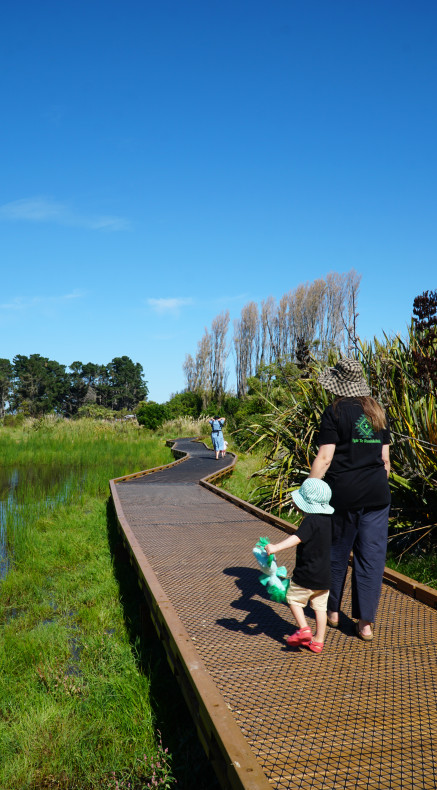
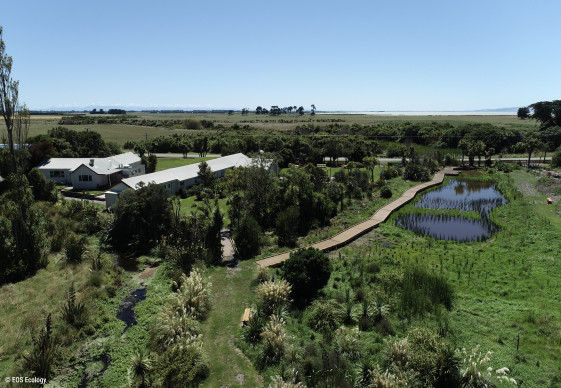
Over 50,000 native plants have been planted across the nine participating properties, including nearly two kilometres of continuous planting on both sides of Waikēkēwai Stream. Nine springheads have been fenced and planted, and the Department of Conservation’s Weed Strikeforce has undertaken pest plant control across 17 hectares.
A mātauranga Māori and water quality monitoring programme started in early 2023, gathering data across nine sites along Waikēkēwai Stream, Papatahora Stream, and Taumutu Creek. What is reflected in the data is encouraging. As more native planting takes hold, good numbers of tuna and īnanga are returning. The awa is gradually coming back to life.
Mapihi Martin-Paul, Pou Waihora Whata Rau for Te Taumutu Rūnanga, is proud of the way skills and expertise within the hapū have been strengthened and refined through the project.
“In my professional capacity as a Strategic Advisor Māori at Boffa Miskell, I’ve been on the other side working for clients. What makes this project special is that it’s the first time the hapū have been ‘the pilot’ and not ‘the passenger’. I was at a hui yesterday, and I thought, ‘We’ve got some wicked people within our own whare.’ You need external collaboration and partnerships, but we know as a hapū, what it takes to save our lake.”
As a Project Lead and one of the “pilots” for Whakaora Te Waikēkēwai, Sophie says the project has meant a lot to her on a personal level.
“The values behind this mahi – kaitiakitanga and manaakitanga – are things I’ve grown up with. They’ve been passed down through my whānau, who have all played a role in caring for our environment. Becoming a parent myself has made that even stronger. It’s not just about the work we’re doing now, but about what we’re leaving behind
for our tamariki and future generations.”
The celebration was as much about the relationships forged – between mana whenua, private landowners, local government, and contractors – as the environmental outcomes.
Dr Fiona Shanhun, Director of Science at Environment Canterbury, and Environment Canterbury’s Joint Officials Group member, welcomed the shift from rūnanga being involved in council-led projects, to rūnanga leading projects themselves.
“This is a wonderful example of a highly successful mana whenua-led project. It shows how local councils and the Department of Conservation can work alongside rūnanga to collectively enhance te taiao. The structure and approach we have through the Whakaora Te Waihora Joint Officials Group ensures that everyone is on the same page, so we can resolve any challenges as well as celebrate success together. I’m really delighted to see this work flourish under Sophie’s leadership and look forward to what comes next.
The rōpū follows a walkway linking the two old pā sites, providing access from the marae to Hone Wetere church and the urupā, where information panels detail the natives that have been planted. The water is clean, clear, and sparkling.
David Murphy, co-project management, and Team Leader Partnerships Programmes at Environment Canterbury, reflects on what has made this project unique.
“This area of co-governance around whenua is voluntary co-governance. No one is saying we have to work together; we want to work together because it works. Today, where you see the water flowing, wetlands and plants, that’s the true testament to the work. This kind of arrangement is a really good template for the future of Aotearoa, how we can come together with mana whenua leadership, farmers, local government, central government, working together to deliver good stuff.”
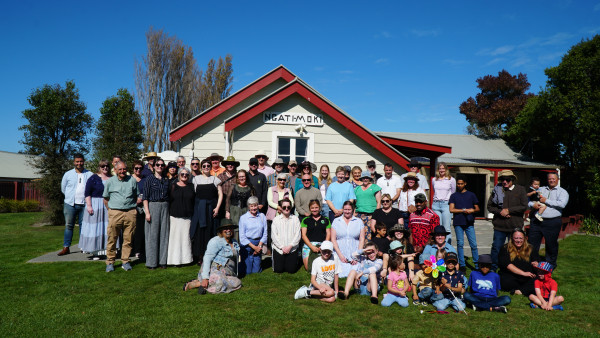 Joining together to acknowledge the mahi and relationships formed over the five-year project to rejuvenate Waikēkēwai stream and the surrounding wetlands of the marae grounds of Ngāti Moki Marae.
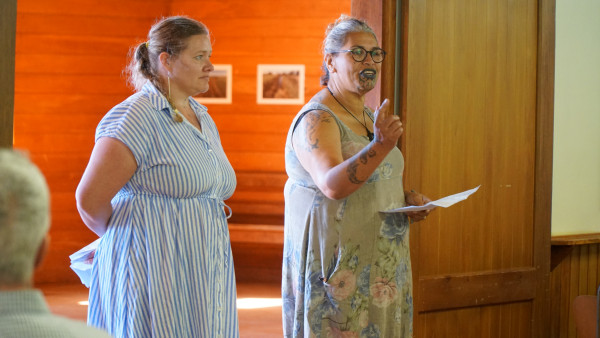 Project Lead Sophie McGregor and Puamiria Parata-Goodall, interim Tumu Whakarae, share the history of Waikēkēwai and thank everyone involved in the project.
The achievements of this project have not gone unnoticed. In October 2025, Whakaora Te Waikēkēwai received Te Waka o Aoraki Trophy at the Canterbury Aoraki Conservation Board Award for outstanding conservation efforts in the Waitaha Canterbury region. Completing the loop, the group breaks for lunch at nearby Sedgemere Hall, where the rūnanga has displayed aerial photographs on the old hall walls showing before-and-after views of the work, a two-kilometre corridor, dense with green riparian planting along both sides of Waikēkēwai Stream. With the help of programmes like Te Ara Kākāriki’s Kids Discovery Plant Out Days, local school children have planted over 2,000 native plants across three separate sites. In the process, tamariki learned about riparian planting, species identification, raranga, habitat creation, and storytelling.
Planning for the next project, the restoration of Muriwai o What (Cooper’s Lagoon), is well underway. One of the tribal properties returned through settlement, the Muriwai komiti has spent the last three years getting restoration, implementation, and pest management plans put together.
“With the Whakaora Te Waikēkēwai funding agreement ending, this phase of environmental works is also ending; however, the work doesn’t stop here,” says Sophie. “We simply progress to the next significant area in our pathway towards the overall Whakaora Te Waihora vision… Hydrologically linked to Te Waihora, Muriwai o Whata is a natural next step, made easier as the project is ready to deliver.”
As the day comes to a close, interim Tumu Whakarae, Puamiria Parata-Goodall, shares a final thought about the motivation behind the mahi of restoration.
“Waikēkēwai physically connects us all the way through our pā down to Waihora. We came here for mahinga kai, we came for the lake, the waterways, we came for the whenua. It produced for us, and that’s why we’ve been living here for over 700 years. Ngāi Te Ruahikihiki is committed to its environment, to a vision that restores that cultural
livelihood and the values of our ecosystem. It’s generations’ worth of work we are committing to.”
 Top
Top